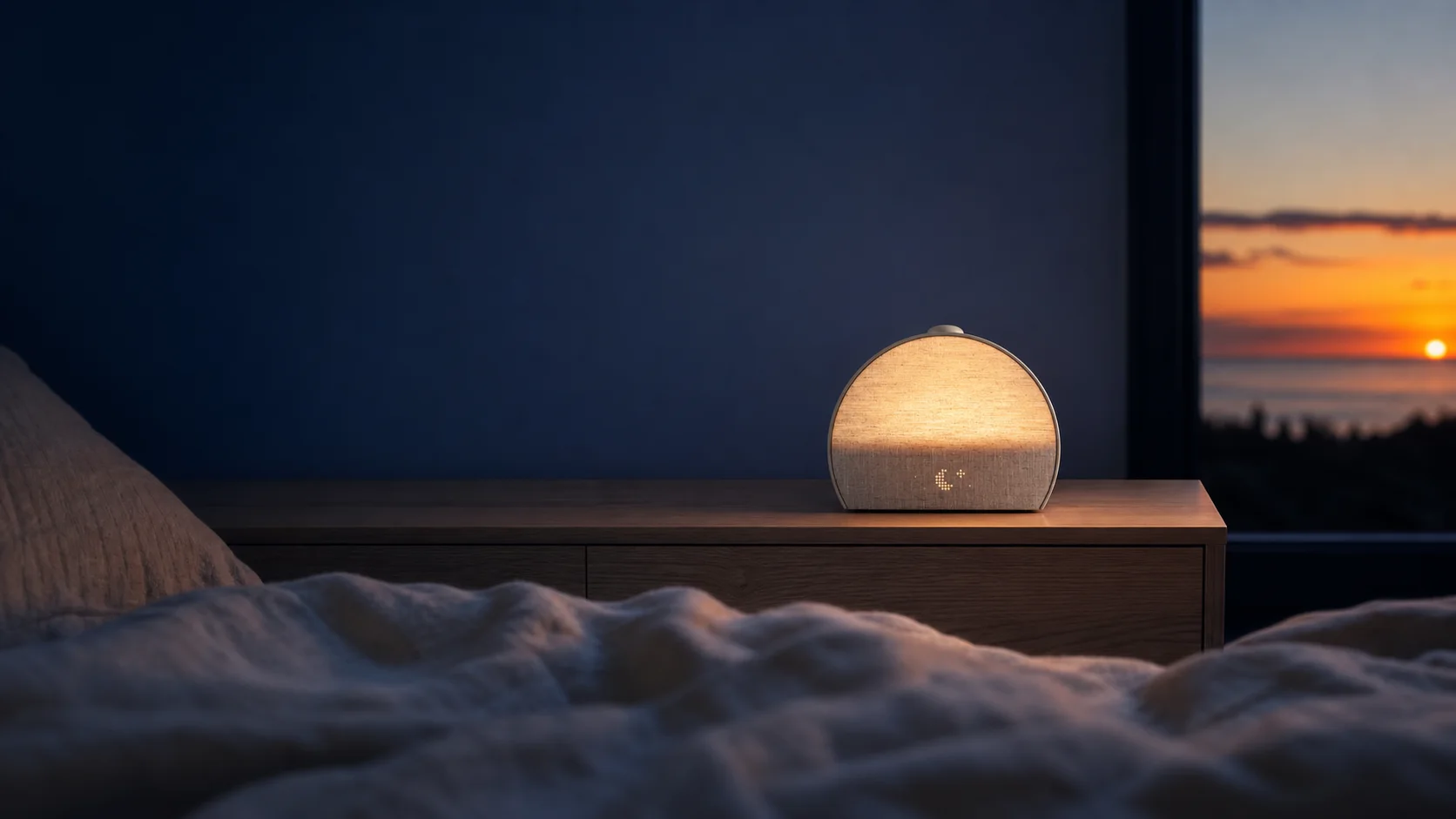
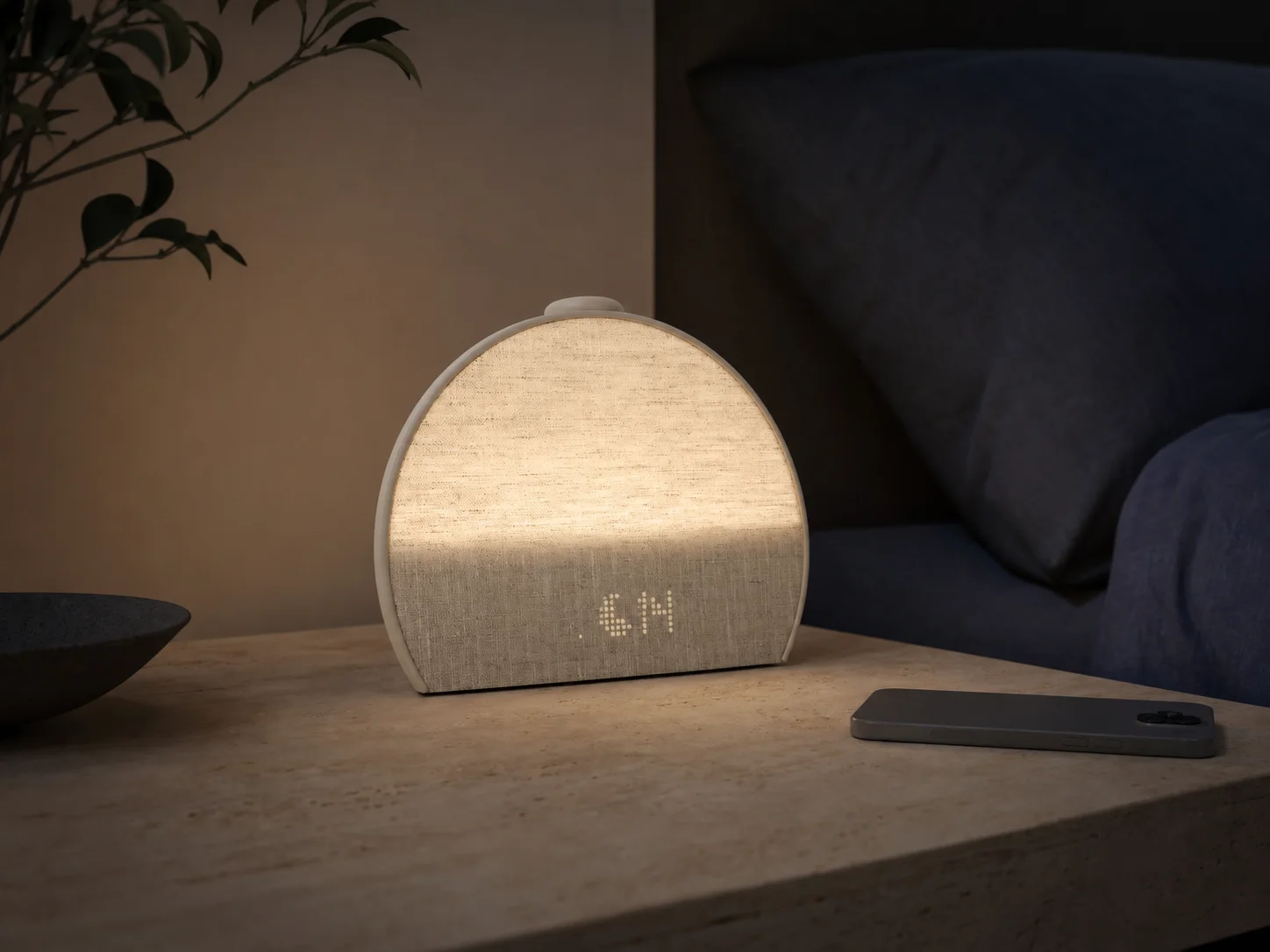
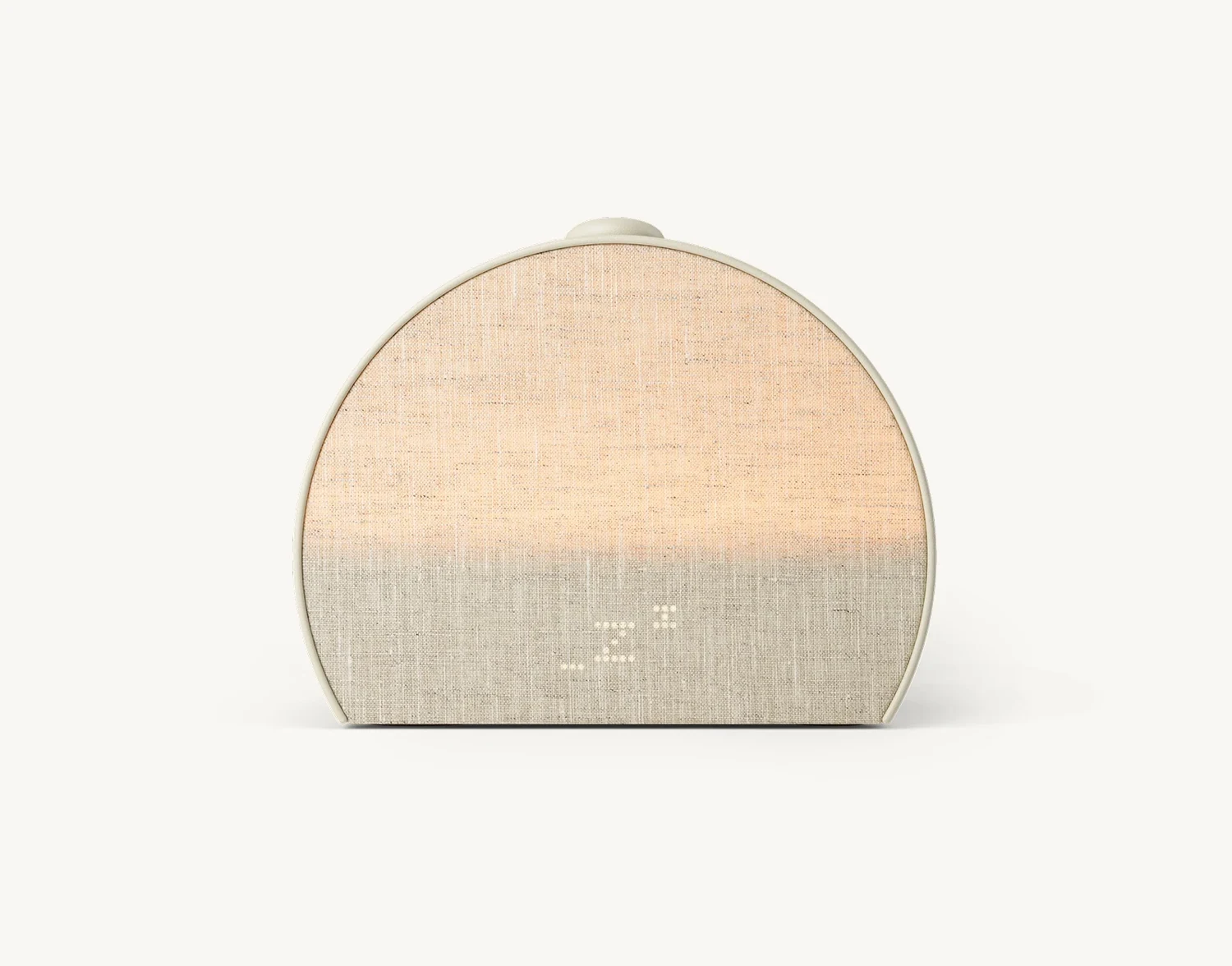
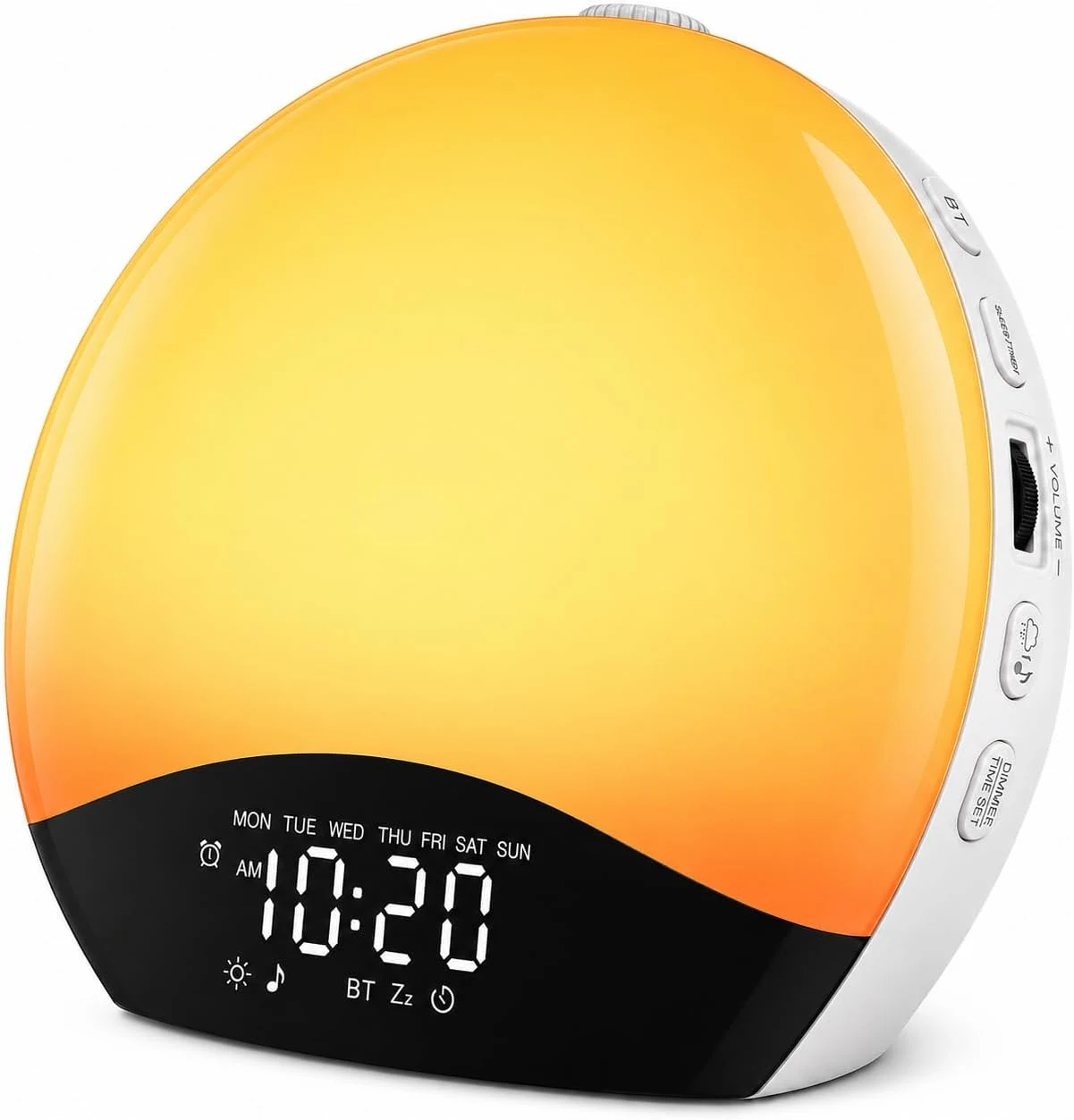
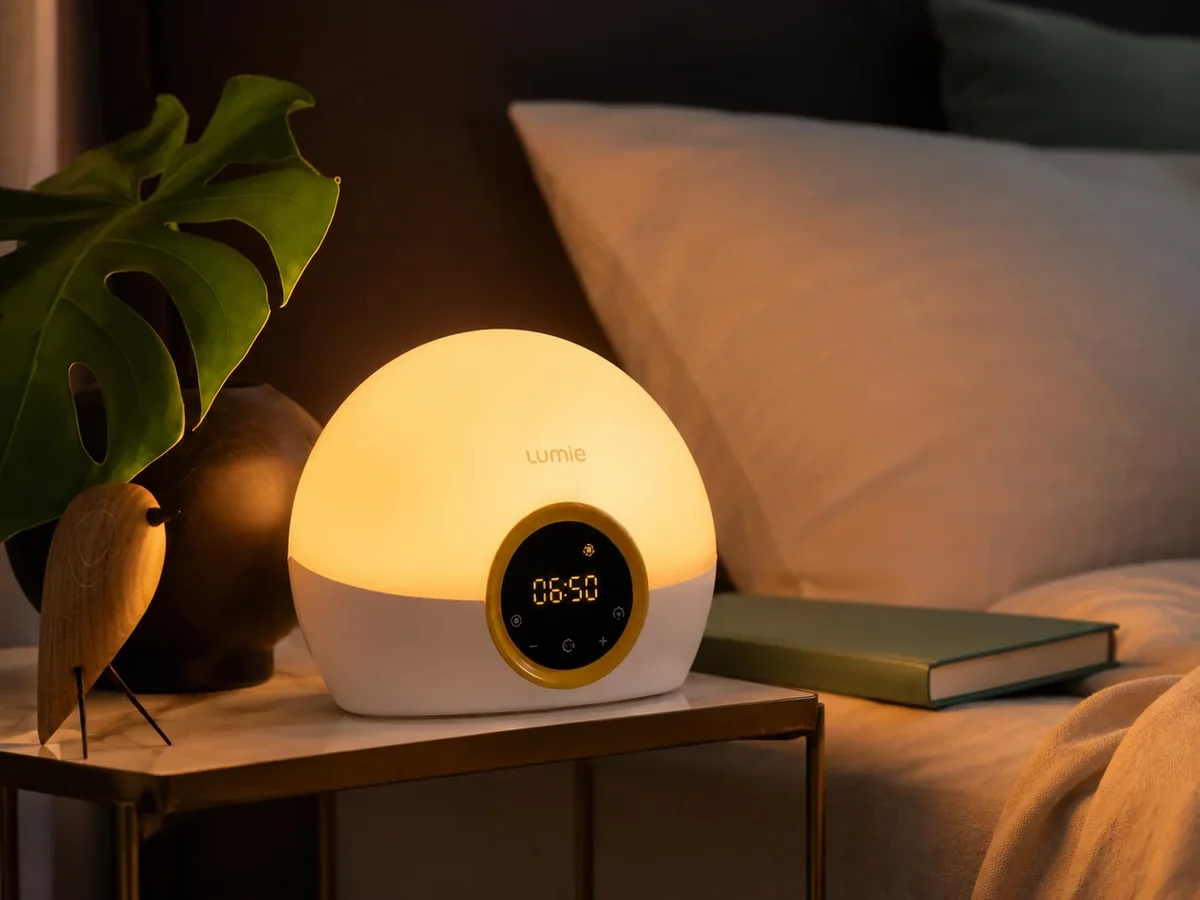
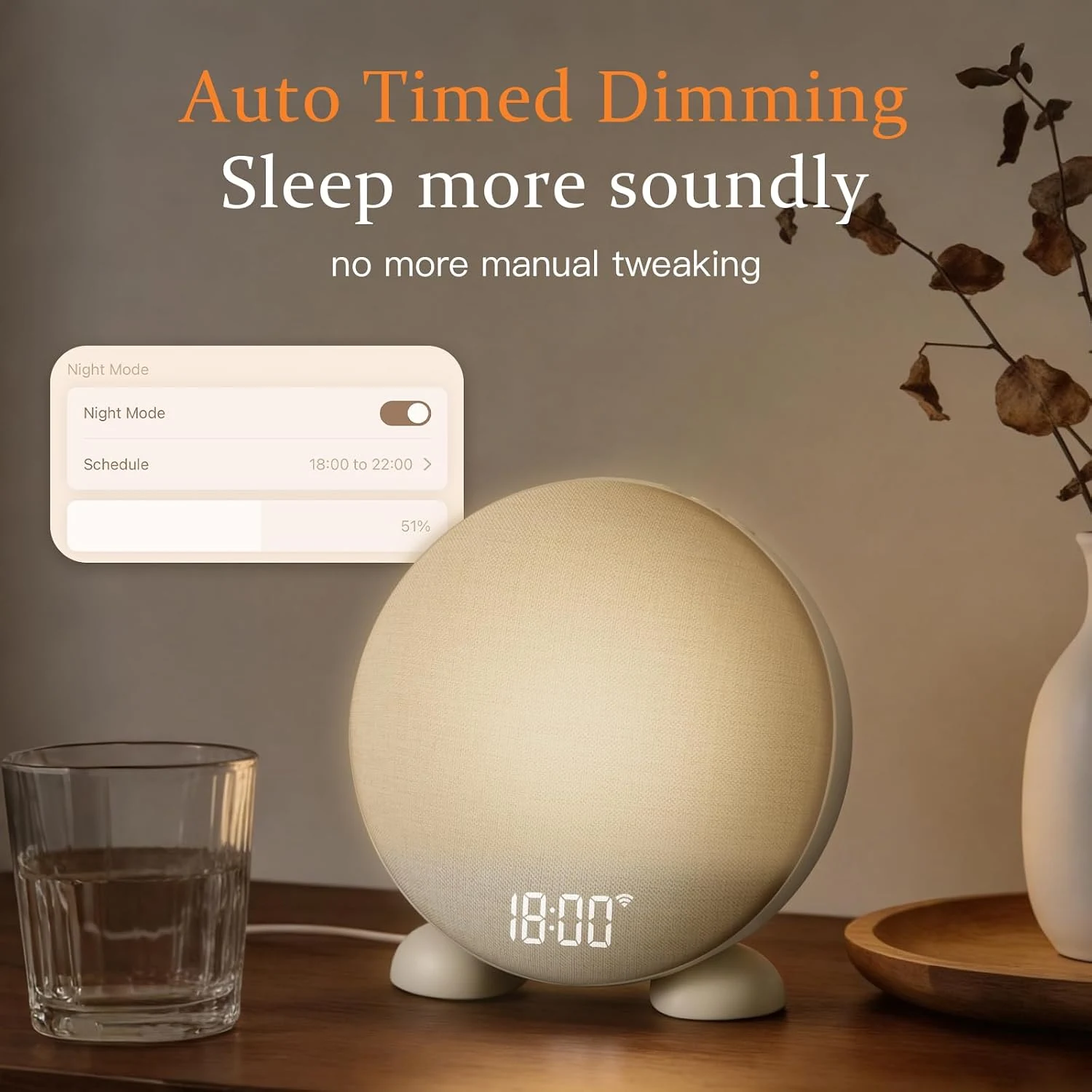
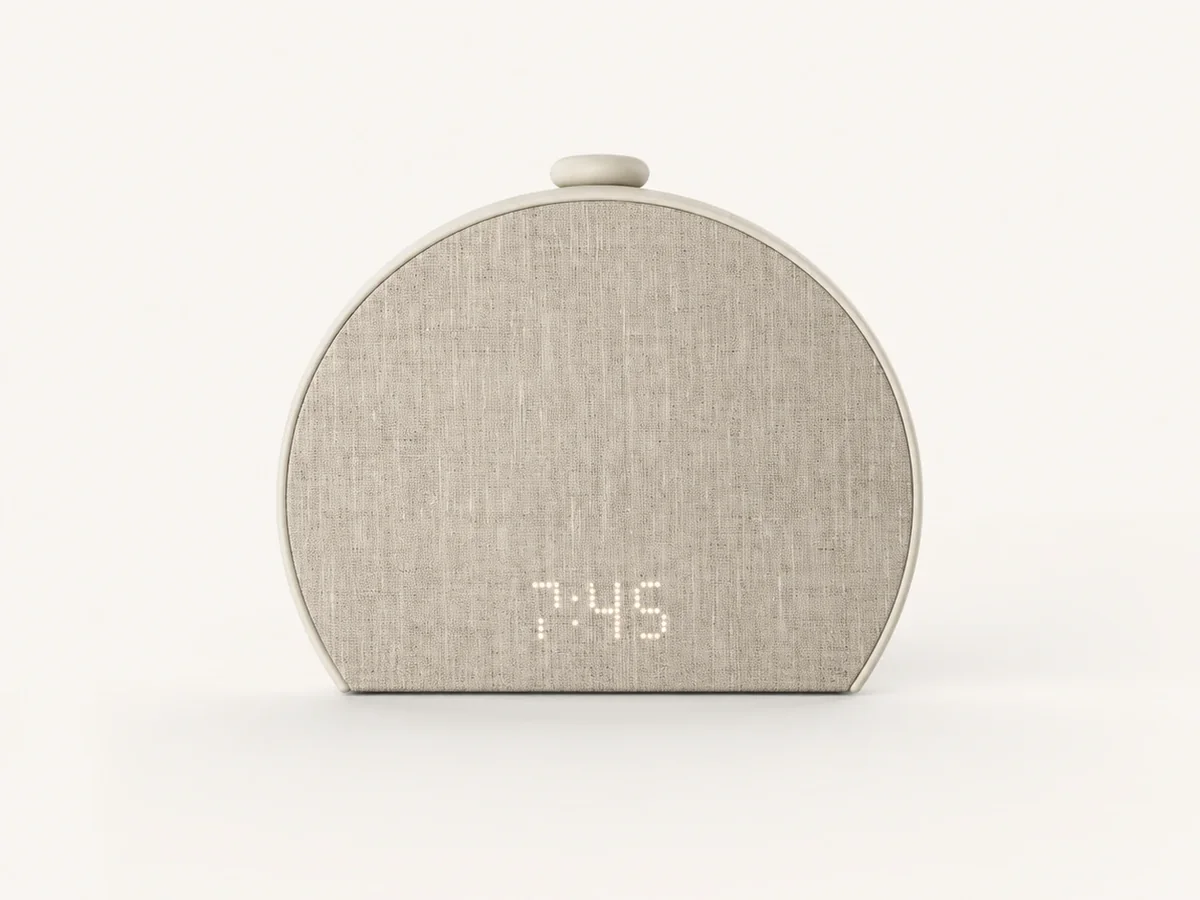
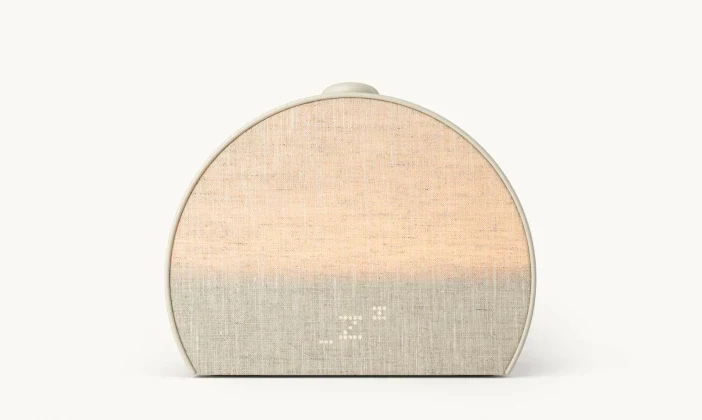
Hatch Restore 3 sunrise alarm clock glowing in a bedroom at dawn

WELCOME TO TOPCLOCKS

Sunrise Alarm Clocks: Choose the Wake-Up Sequence That Fits You

Compare the whole morning sequence—light ramp, sound deadline, bedside controls, app requirements, and power limits—not just color counts.

Manufacturer documentation checked July 23, 2026 · No hands-on test claims

Research disclosure: This guide compares current manufacturer specifications, support documents, and manuals. We did not conduct hands-on brightness, sound, or long-term reliability tests on these five products. “Best fit” means a fit based on documented functions, not a laboratory score or universal winner. Features, prices, software, and subscription terms can change; verify the linked product information before buying.

Our editorial line is simple: an unverified field stays unknown. A missing specification does not become a “yes” because a similar clock has the feature, and a manufacturer's outcome claim does not become our test result.

The four quickest routes

Short on time? Start with the control style you want.

  • Choose Hatch Restore 3 if you want an app-built evening and morning routine, then physical bedside controls once setup is finished.
  • Choose Lumie Bodyclock Shine 300 if you want a stand-alone clock with unusually broad control over sunrise duration, built-in sounds, and FM radio.
  • Choose Philips SmartSleep HF3520/60 if you want a classic colored sunrise, two alarms, FM radio, and no app ecosystem.
  • Choose Dreamegg Sunrise 1 if app-free hardware controls and a built-in sound machine matter more than published lux figures or smart features.
  • Choose WiiM Wake-up Light if your wake sound should come from music, internet radio, or a voice-controlled smart-audio system.

There is no honest “best for everyone” in that list. A person who refuses to bring an account-connected device into the bedroom and a person who wants Spotify as an alarm are shopping for different systems, even if both products glow before wake time.

What a sunrise alarm clock actually controls

The alarm time can be misleading.

On many wake-up lights, the chosen time is when the sunrise finishes and the sound begins. A 30-minute sunrise for a 6:30 alarm therefore starts around 6:00. That is usually what buyers expect, but the detail belongs in the setup screen or manual, not in an assumption.

The ramp has three practical parts:

  1. Starting level. A faint first light may preserve sleep while still beginning the transition. A high starting level can wake a light-sensitive person too early.
  2. Duration. A longer ramp is not automatically gentler. It simply exposes you to changing light for longer. Some people wake near the end; others notice the first glow.
  3. Maximum level at your position. The light reaching your eyes depends on output, distance, angle, bedding, and the room—not just a number measured at the lamp.

Sound changes the job again. Light-only mode tests whether dawn simulation can wake you. Light followed by sound is a layered alarm: the room is already brighter when the audio deadline arrives. That second arrangement is safer for many workdays because it does not require the light to do everything.

Then there are the controls. Imagine changing tomorrow's alarm after you have put your phone away. Can you do it on the clock? If the answer is no, app convenience during setup may turn into friction at bedtime. Now imagine the alarm sounding in the dark. A clearly shaped snooze control is more useful at that moment than fifty color scenes.

Five current sunrise alarm clocks compared

Model Control model Documented sunrise control Sound route App, account, or subscription Display and power notes Best documented fit
Hatch Restore 3 App setup plus physical routine, light, volume, alarm, and snooze/stop controls Custom sunrise alarm; exact choices are configured in the Hatch Sleep app Built-in sleep and wake audio; broader content library with Hatch+ App, Bluetooth device, and 2.4 GHz Wi-Fi required for setup. A Hatch+ trial is required during setup, but core features remain after cancellation Clock can be hidden and tapped to reveal; manufacturer says to keep the unit plugged in A guided routine with phone-down use after setup
Lumie Bodyclock Shine 300 On-device 15–90 minutes; adjustable maximum intensity 15 sounds or FM radio; sound is optional No app or content plan listed Display can fade low or switch off. Manual says time is kept for 30 minutes without power Stand-alone control and a wide ramp range
Philips SmartSleep HF3520/60 On-device 20–40 minutes; 20 brightness levels; red, orange, and yellow transition; up to 300 lux Five sounds or FM radio; two alarms No app Display has multiple brightness levels including off. Specification lists 4–8 hours of time backup A classic no-app colored sunrise with dual alarms
Dreamegg Sunrise 1 On-device tactile controls Adjustable duration; exact range and peak lux are not stated on the current product page 29 sleep-aid sound profiles and progressive wake sounds No app, Wi-Fi, or data tracking according to Dreamegg Corded USB-C power; outage behavior is not stated An app-free sound machine and wake light
WiiM Wake-up Light App, Alexa, and physical light/audio controls App sets duration, maximum brightness, sound, volume ramp, and schedule Built-in sounds, internet radio, podcasts, or supported music services WiiM Light app and Wi-Fi are central; Alexa is optional. Music services may have separate account or plan rules Physical buttons handle light, brightness, volume, stop, and snooze; confirm outage behavior before relying on it Smart audio, streaming, and flexible routines

Two power notes deserve emphasis. “Keeps time” or “time backup” means exactly that unless the manual says more. It does not prove that the lamp and speaker will operate through an outage. And if a manufacturer does not publish outage behavior, the field is unknown—not a silent yes.

Hatch Restore 3: for an app-built routine

Five models

Putty fabric Hatch Restore 3 sunrise alarm clock glowing on a bedside table
Hatch Restore 3: app-built routines with physical bedside controls after setup. Original TOPCLOCKS editorial image; verify the exact finish and controls on the current model.

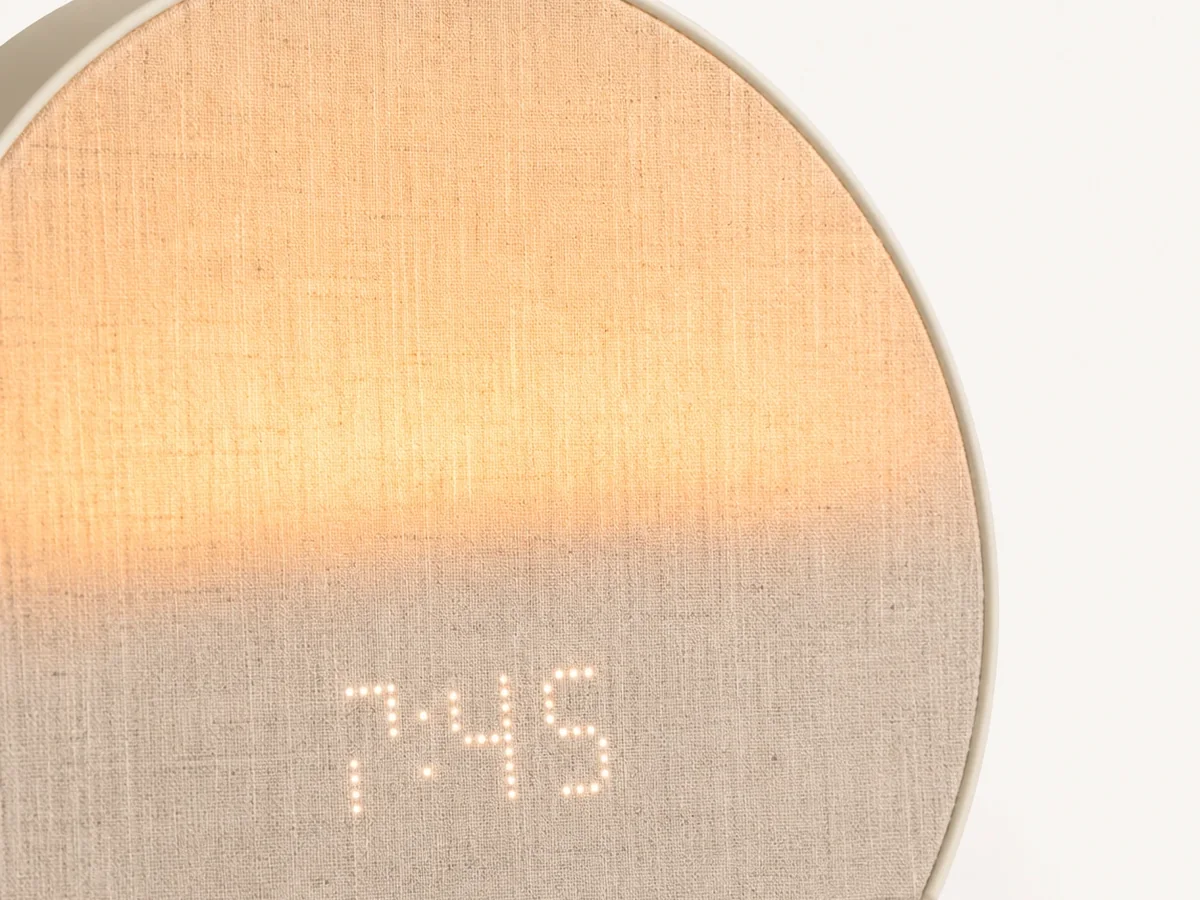
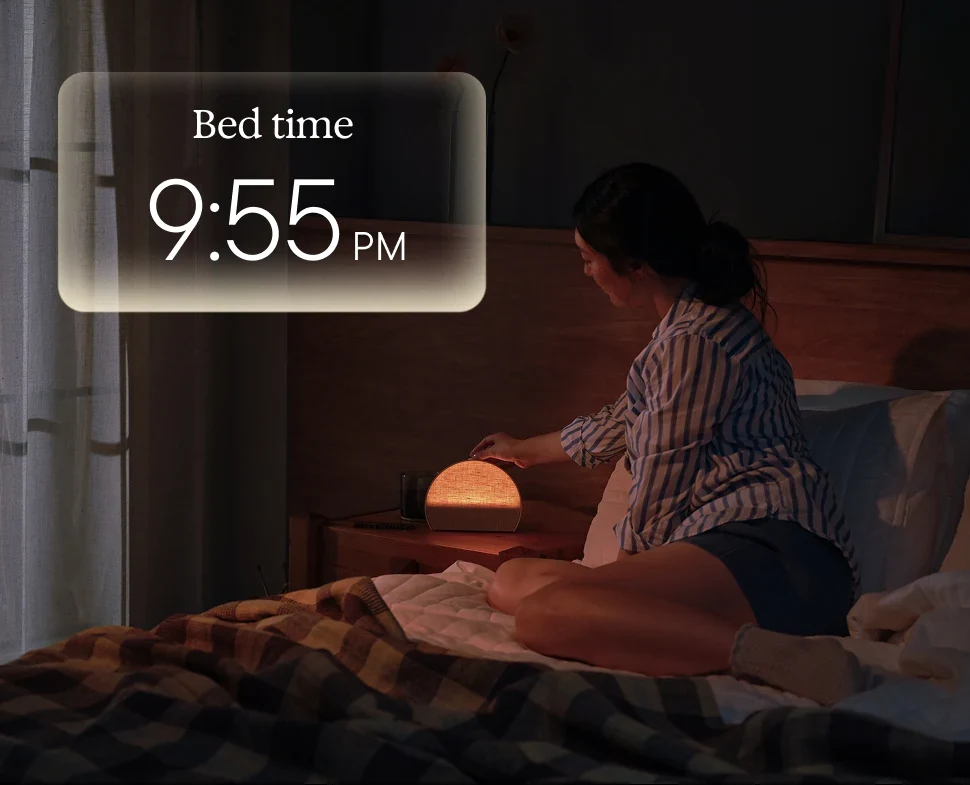
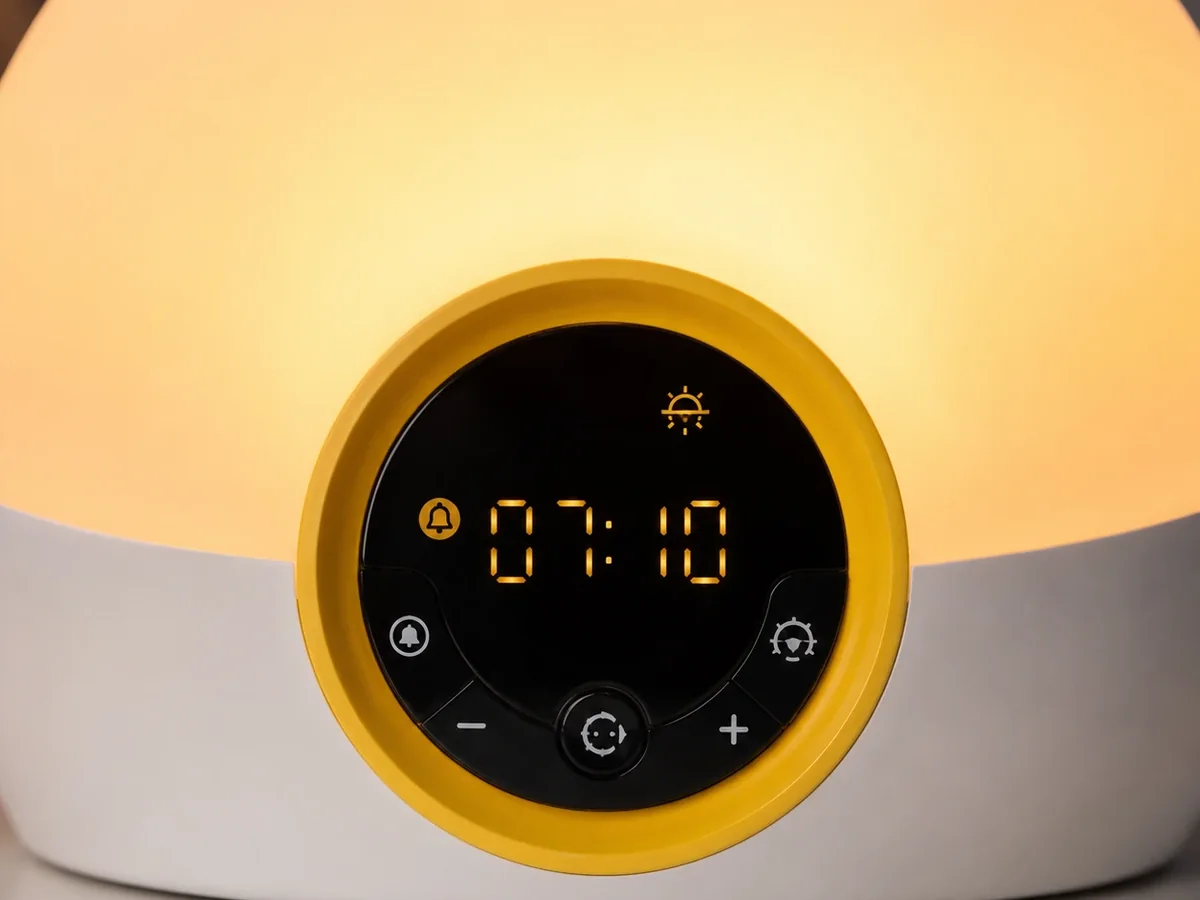
Hatch Restore 3 treats waking as one end of a larger sleep routine. In the app, you arrange light and audio for the evening, sleep period, and morning. At the bedside, the large control can start or advance an unwind routine, adjust volume, snooze the morning alarm, or stop it with a long press. Separate controls handle the light and the alarm's enabled state. The clock display can stay hidden until you tap the unit to see the time.

That division of labor is the model's main appeal: complex choices live in the app, while repeated actions live on the device. Someone who likes guided routines but does not want to touch a phone during the routine may find the compromise sensible. It is a narrower promise than “phone-free,” and a more accurate one.

It is not an app-free clock.

Hatch's current setup instructions require the Hatch Sleep app, a Bluetooth-enabled phone or tablet, and 2.4 GHz Wi-Fi. The company also requires enrollment in a free Hatch+ trial during Restore 3 setup. Hatch says you can cancel and retain basic functions, including the sunrise alarm and a selection of free sounds and light options. Extra content remains part of Hatch+.

Read that boundary before purchase, not after entering payment details. The subscription is not required to keep a basic sunrise alarm, but the trial and account flow are part of initial setup. Restore 3 makes the most sense when app configuration is welcome and a changing audio library has value. If your goal is “set an alarm without creating an account,” move to Lumie, Philips, or Dreamegg.

The manufacturer lists Restore 3 at 7.5 by 2.75 by 5.75 inches and 19 ounces. Those dimensions are useful on a crowded nightstand, but they say nothing about how much light reaches a particular sleeper. Place it where the illuminated face has a clear line toward your pillow and keep a sound backup active until you know how you respond.

Sources: Hatch Restore 3, setup and Wi-Fi requirements, technical specifications, physical controls, and Hatch+ requirement.

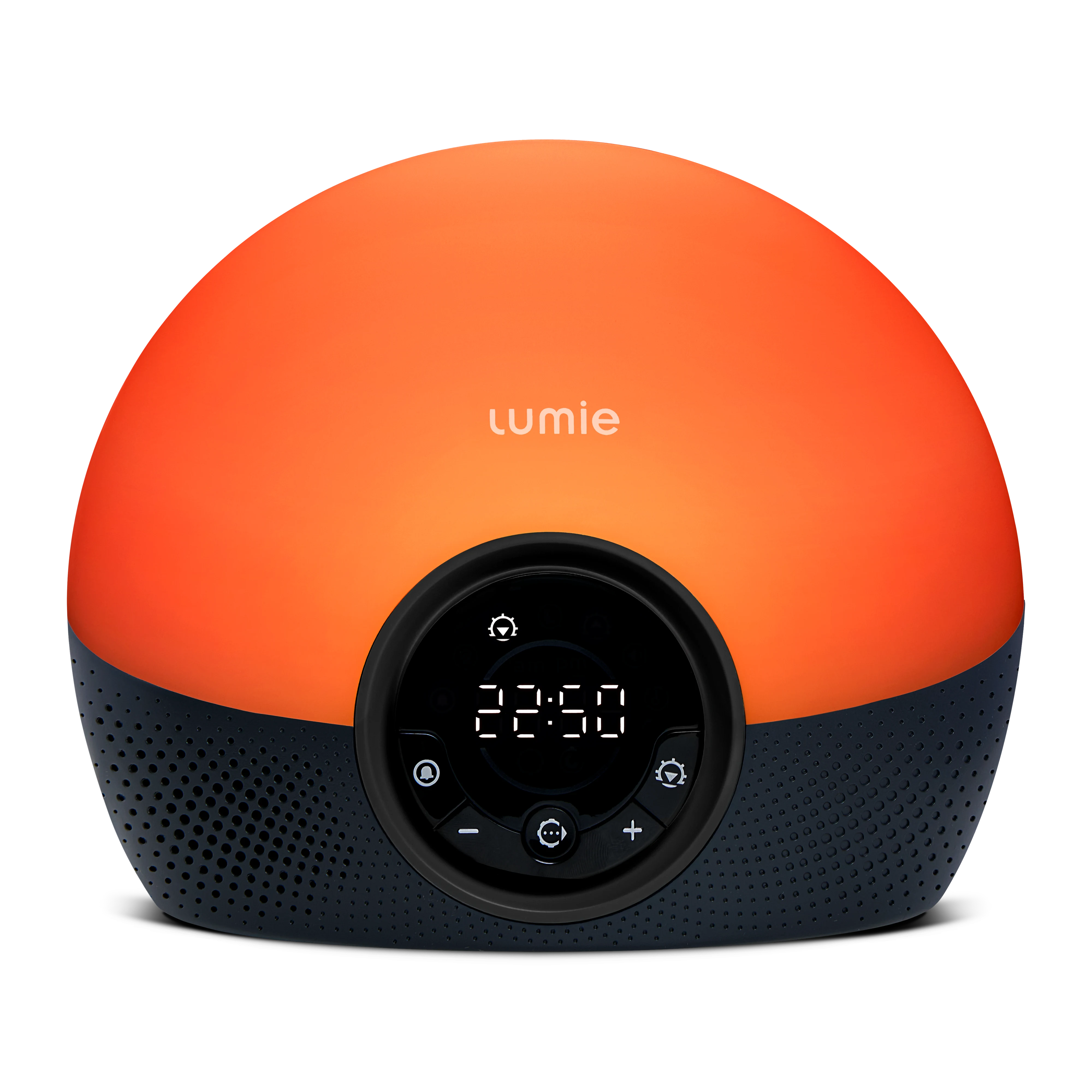
Lumie Bodyclock Shine 300: for stand-alone timing control

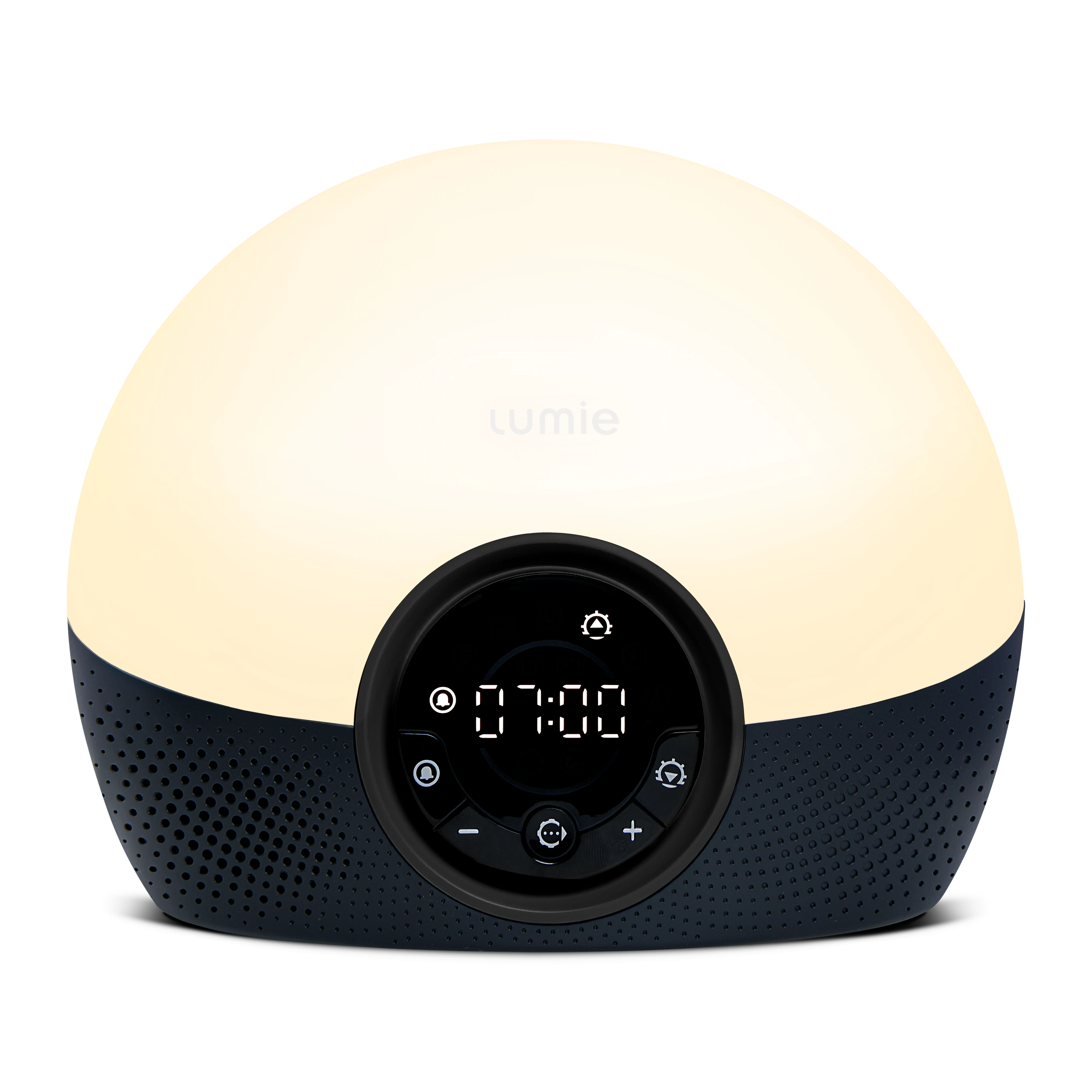
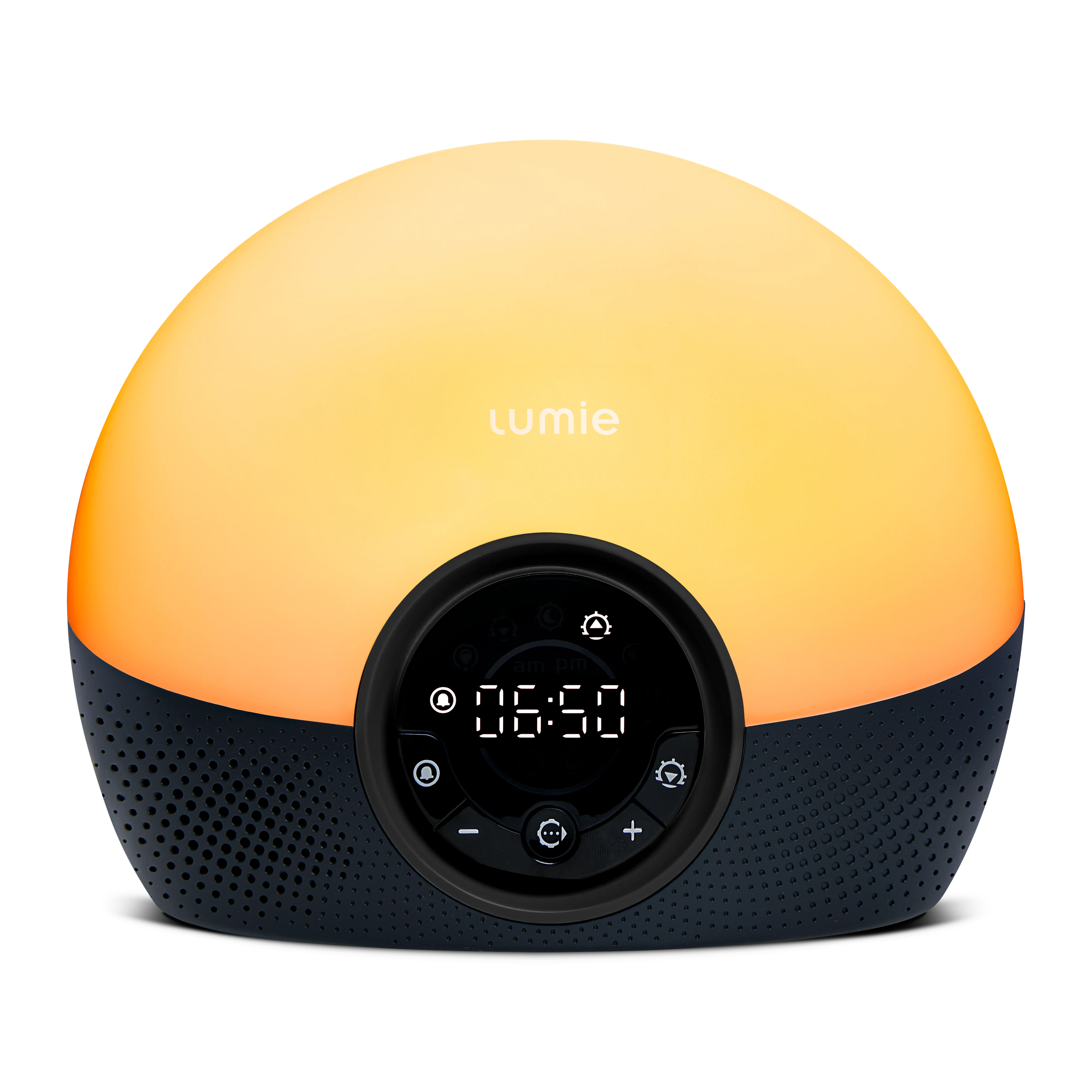
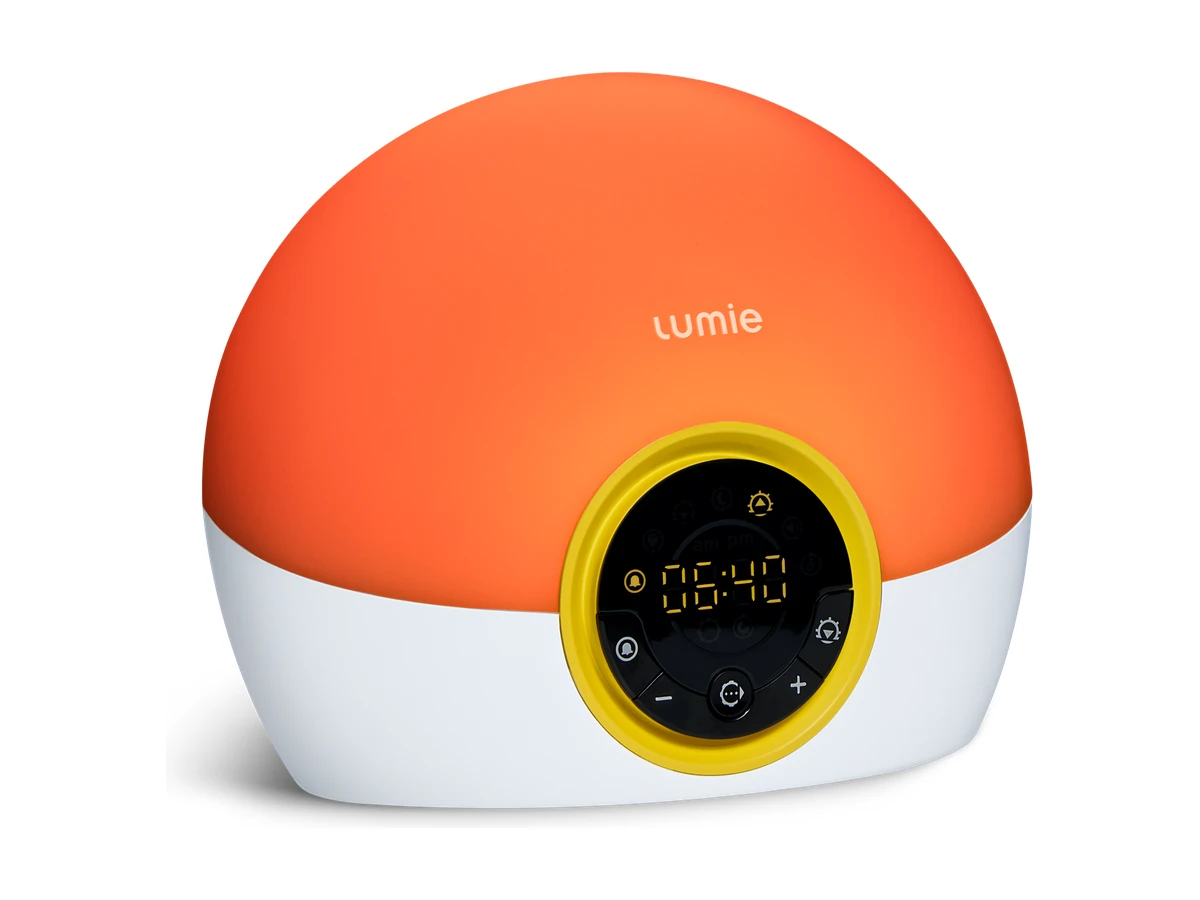
Lumie Bodyclock Shine 300 wide dome wake-up light with fabric base and hardware controls
Lumie Bodyclock Shine 300: a stand-alone dome light with hardware settings and FM radio. Original TOPCLOCKS editorial image; verify the exact finish and controls on the current model.

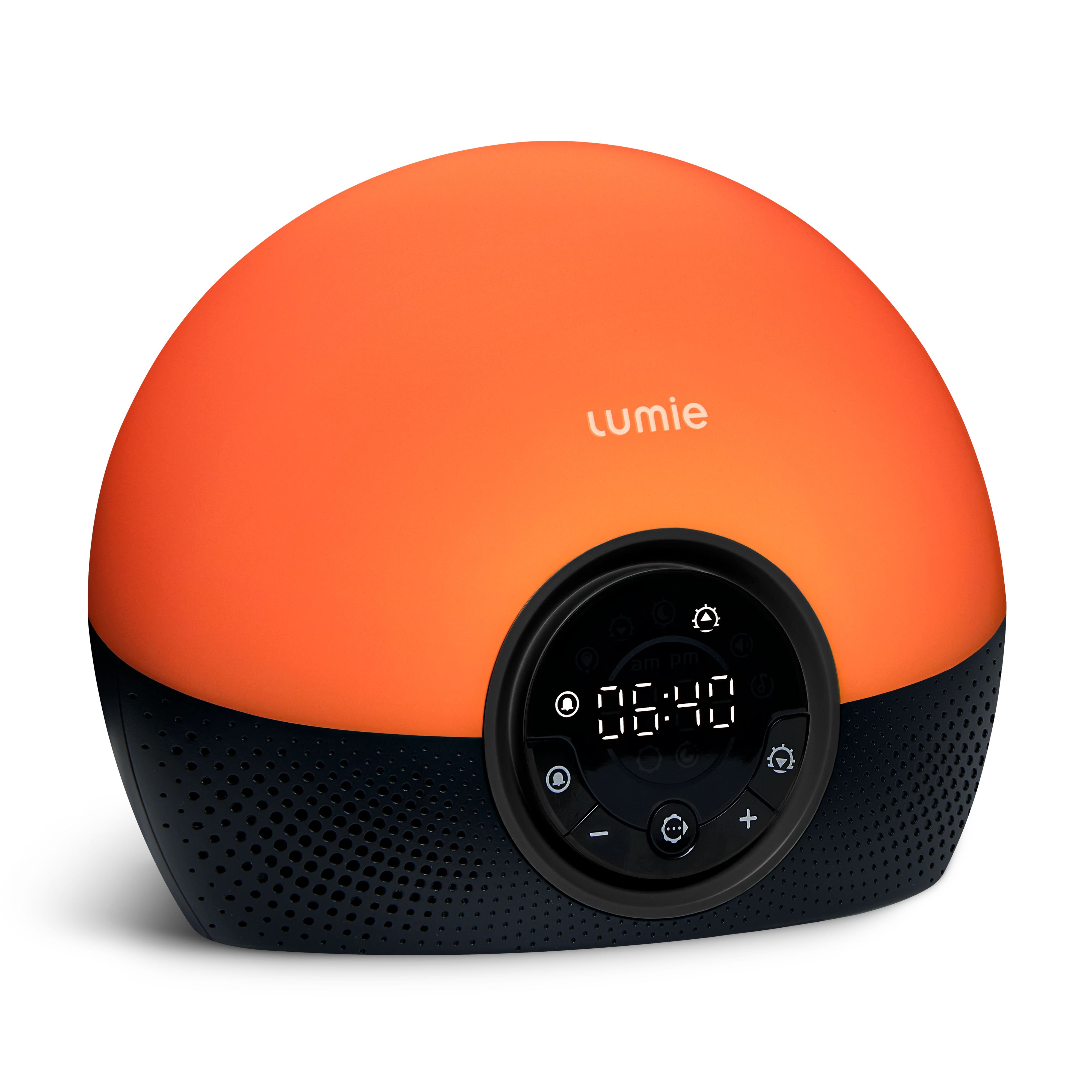
Lumie Bodyclock Shine 300 offers the broadest published sunrise-duration range in this comparison: 15 to 90 minutes. You can adjust the final intensity, add one of 15 sounds or FM radio, and choose daily or weekly alarm behavior. The same range applies to its fading sunset. The integrated LEDs move through red, orange, and warm white rather than treating the wake light as a single static color.

It is a good match for the buyer who wants to experiment. A 15-minute ramp and a 90-minute ramp are meaningfully different morning environments. That range lets a light-sensitive sleeper shorten exposure while someone who wakes slowly can test a longer lead-in. The value lies in the control, not in assuming that the maximum setting must be superior.

Shine 300 also addresses two ordinary bedside problems. Its display can dim with room light or switch off, and the body supports tap-control snooze. You do not need to find a small touchscreen target immediately after waking. The clock includes FM radio for people who want changing spoken or music content without a streaming account.

The power specification needs careful wording.

Lumie's North American manual says the clock keeps time for 30 minutes without power. It does not say that the sunrise lamp and audio alarm continue through that period. Treat the feature as short-term time retention, not a battery alarm, unless Lumie confirms otherwise for the exact unit you buy.

Shine 300 is larger than the low-profile Hatch and Dreamegg shapes: Lumie lists it at 8.3 inches wide, 7.1 inches high, and 4.7 inches deep. That can help put the diffuser in view, but measure your table. A large clock pushed behind furniture is worse placed than a smaller clock with a clear path to the bed.

Sources: Lumie Bodyclock Shine 300 product specifications and North American user guide.

Philips SmartSleep HF3520/60: for a classic colored sunrise

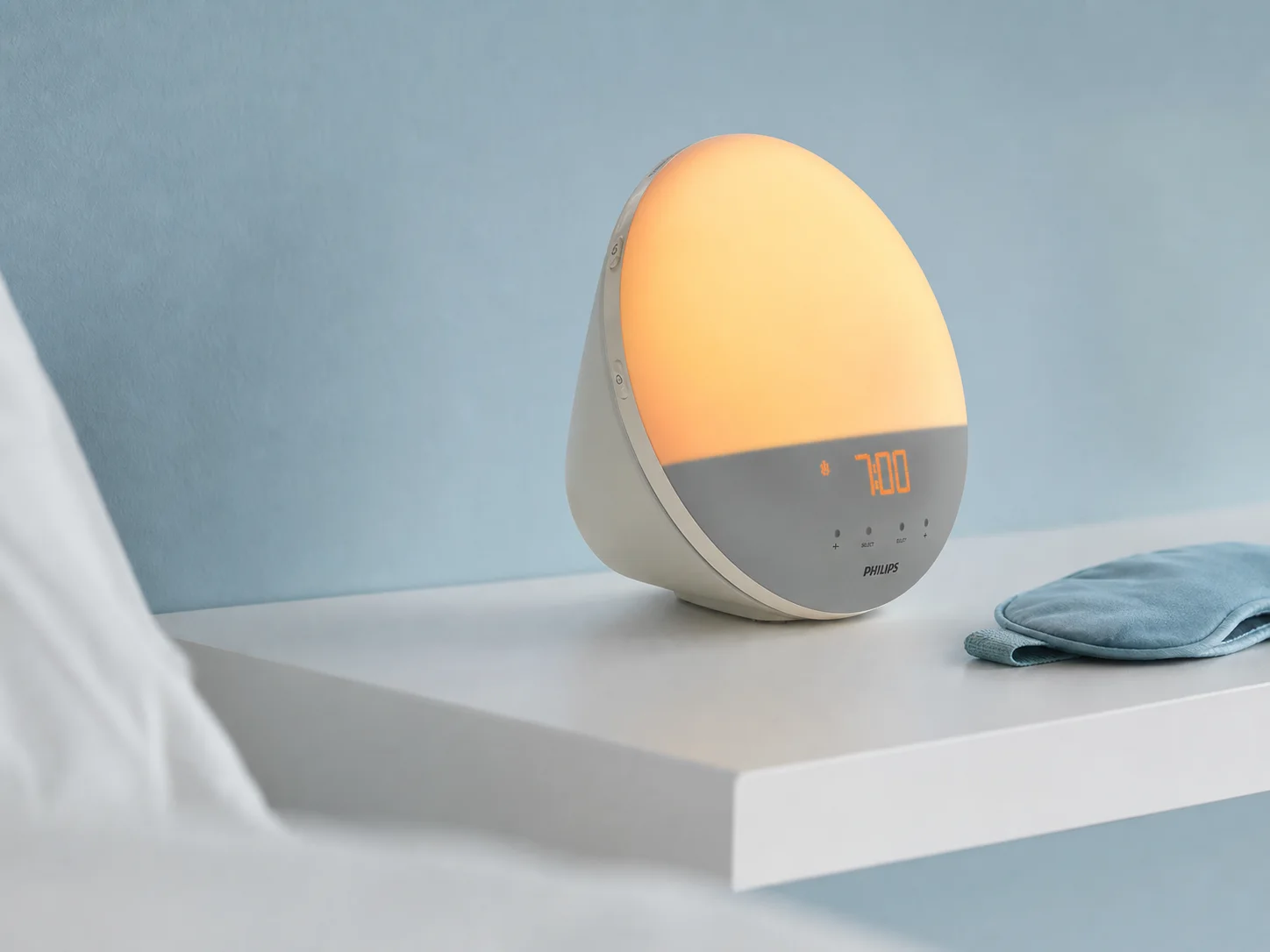
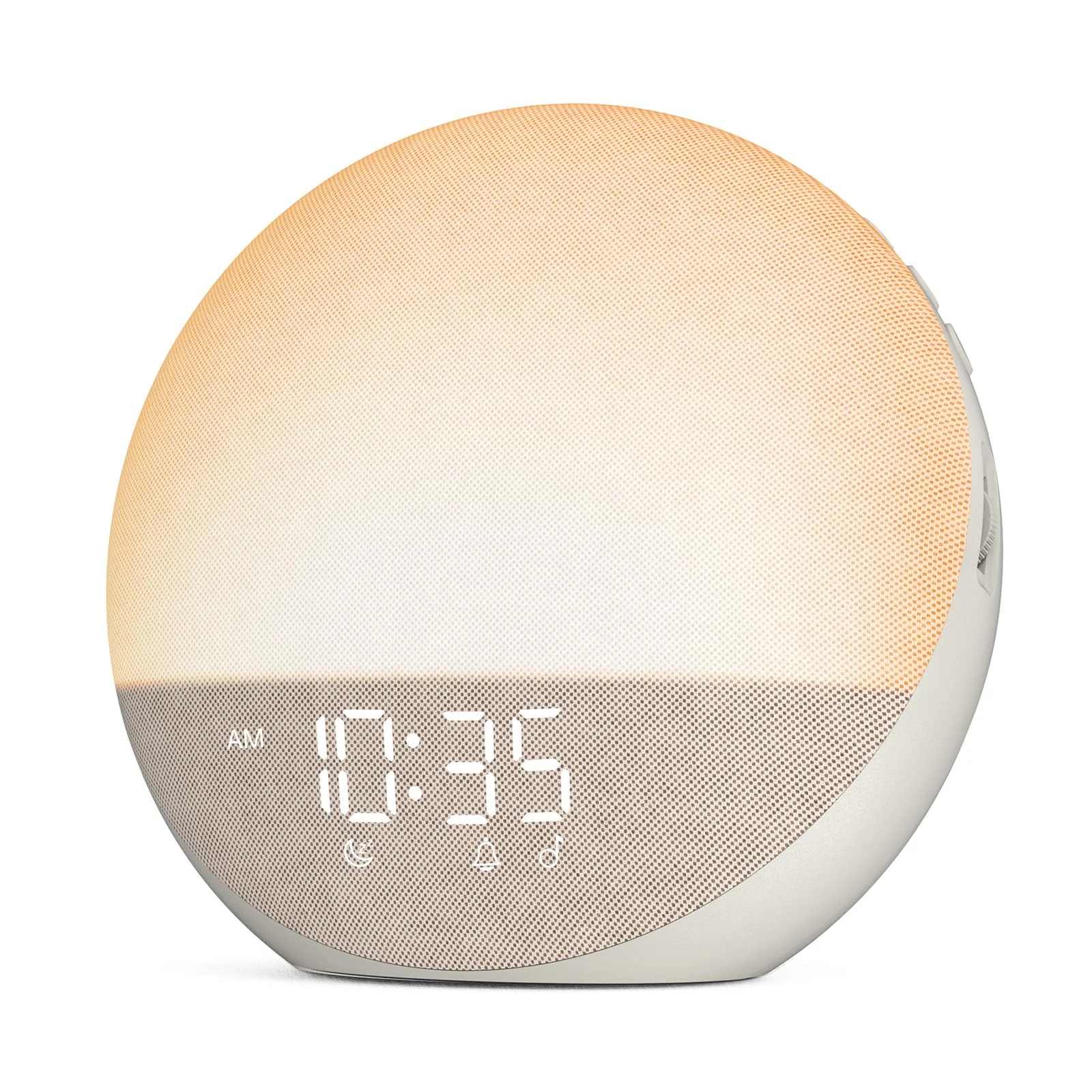
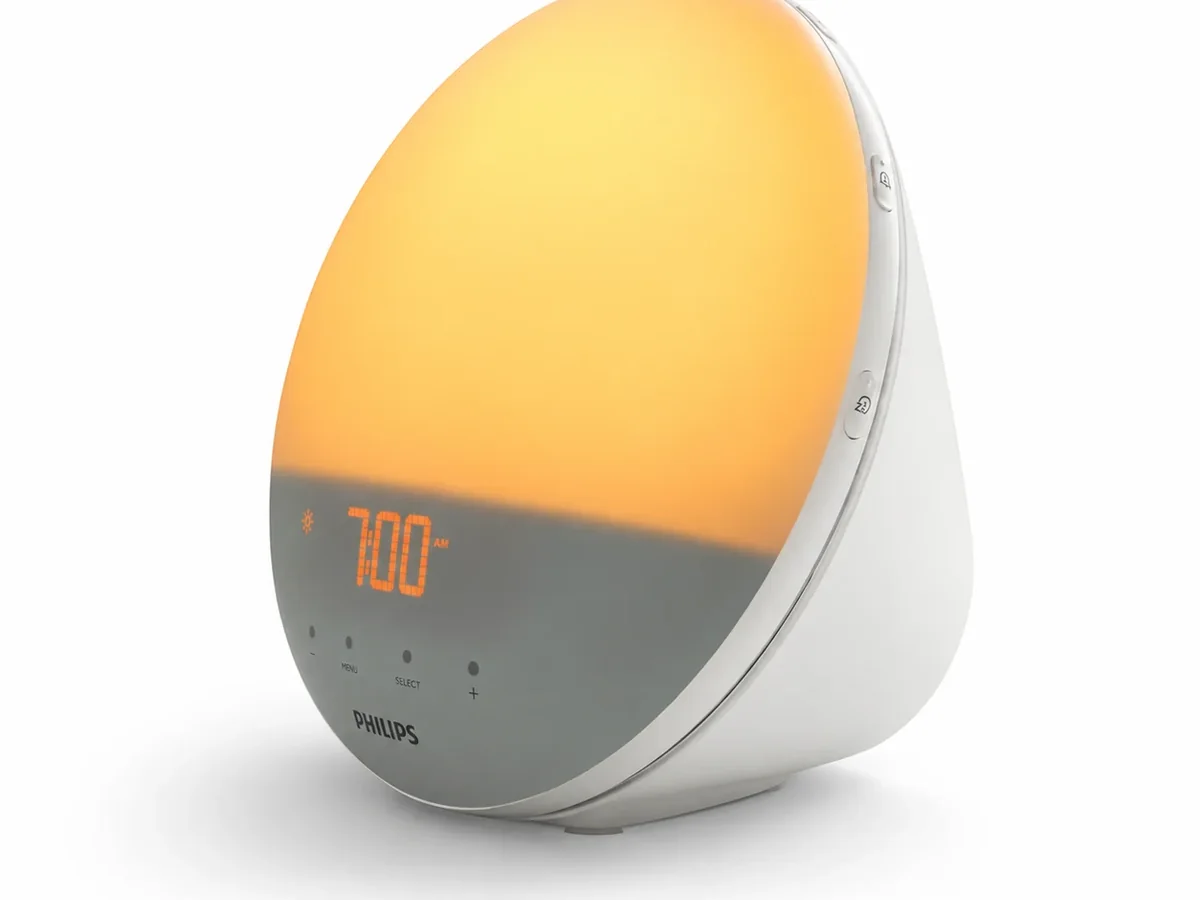
Philips SmartSleep HF3520 leaning oval wake-up light with gray display band
Philips SmartSleep HF3520/60: the classic colored-sunrise design with on-device controls. Original TOPCLOCKS editorial image; verify the exact finish and controls on the current model.

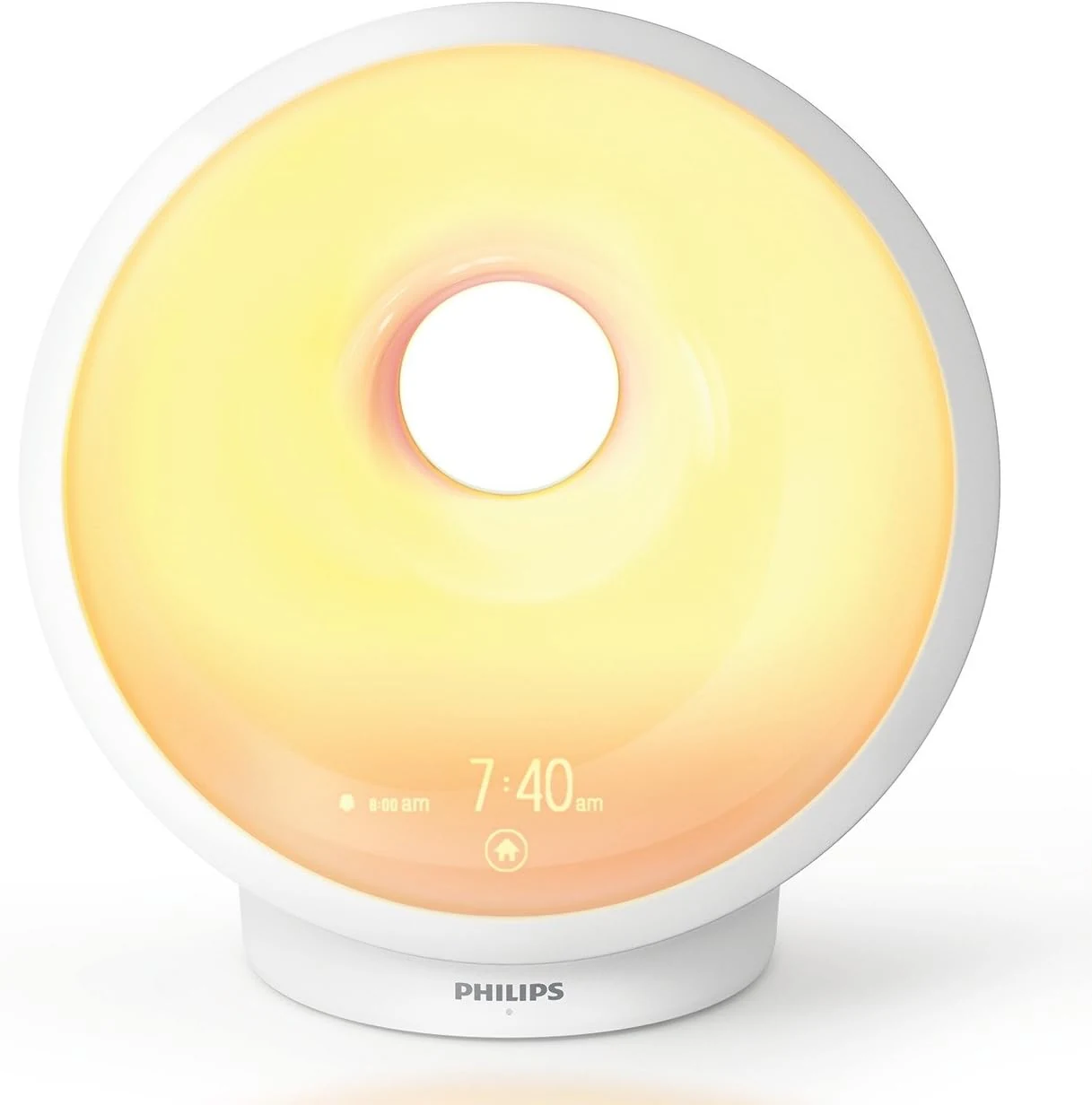
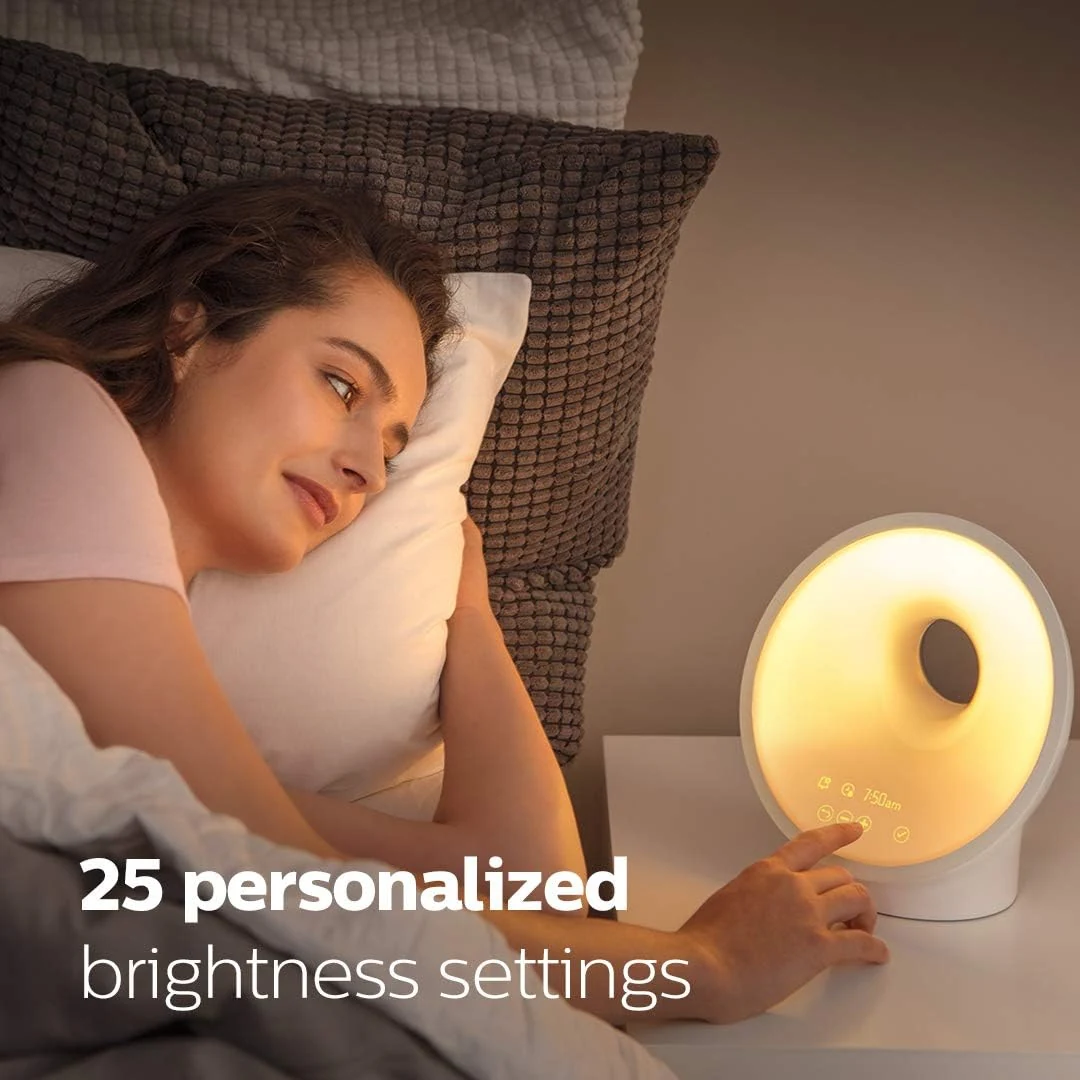
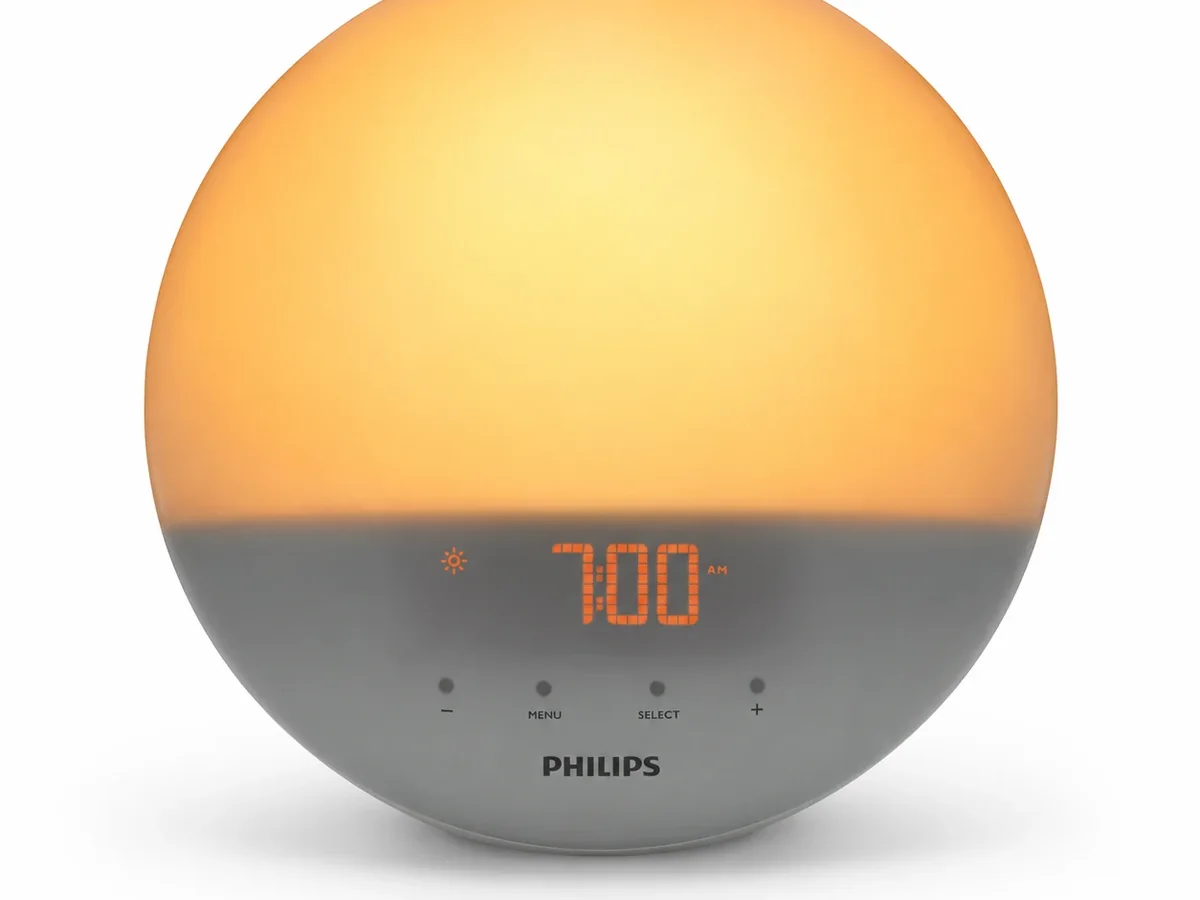
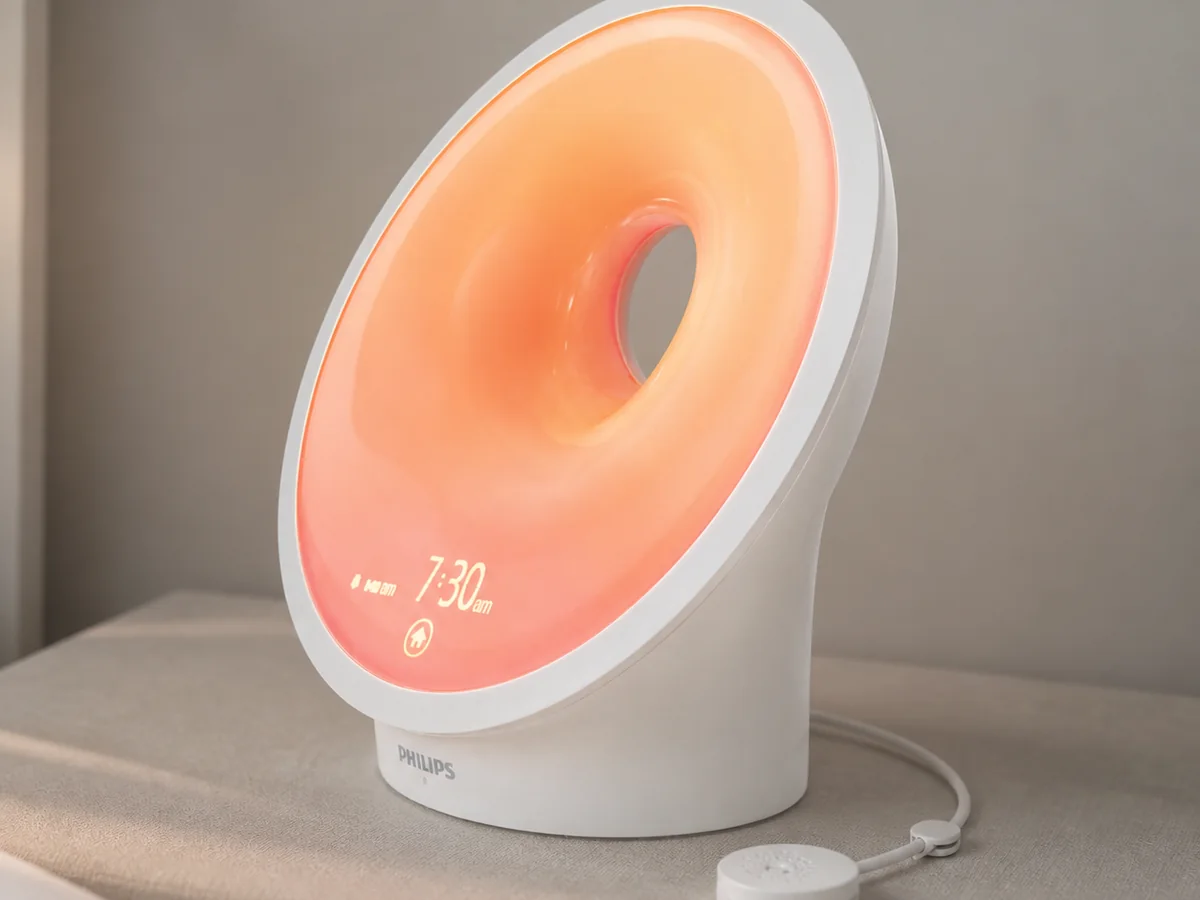
The Philips SmartSleep HF3520/60 is the most conventional wake-up light in the group. It does not try to become a meditation platform or streaming speaker. It brightens through red, orange, and yellow, lets you adjust the sunrise from 20 to 40 minutes, and offers 20 intensity settings up to a published 300 lux. At the chosen wake time, one of five sounds or FM radio can join the light. Two alarm profiles are available.

Those specifications make the Philips easier to compare than products that describe light only as “bright” or “natural.” They still do not predict the illuminance at your eyes. The published lux figure belongs to a measurement condition; moving the clock farther away reduces the light that reaches you. Philips' quick-start guidance for the related HF3650 line, for example, tells users to place the device about 16 to 20 inches from the head. The exact HF3520 manual and the geometry of your nightstand should control your own placement.

The HF3520 also separates display light from alarm light. Its display can step through several levels, including off, while the sunrise has its own intensity setting. That matters to a person who wants a dark room overnight without giving up a bright morning ramp. Tap snooze runs for nine minutes, and the sound rises gradually rather than starting at full selected volume.

Philips lists a 4-to-8-hour time backup. Again, that phrase does not promise a working lamp and speaker during a blackout. It indicates clock continuity. If waking during outages is important, ask Philips or the retailer for a written answer about alarm output, or keep a battery-powered secondary alarm.

This model suits someone who wants documented light settings, two alarms, radio, and no app. Its limits are equally clear: five built-in sounds are few beside a sound-machine clock, and there is no remote configuration or streaming. Simplicity is useful only if those omissions match your routine.

Sources: Philips SmartSleep HF3520/60, 2026 specification sheet, and HF3520 user manual.

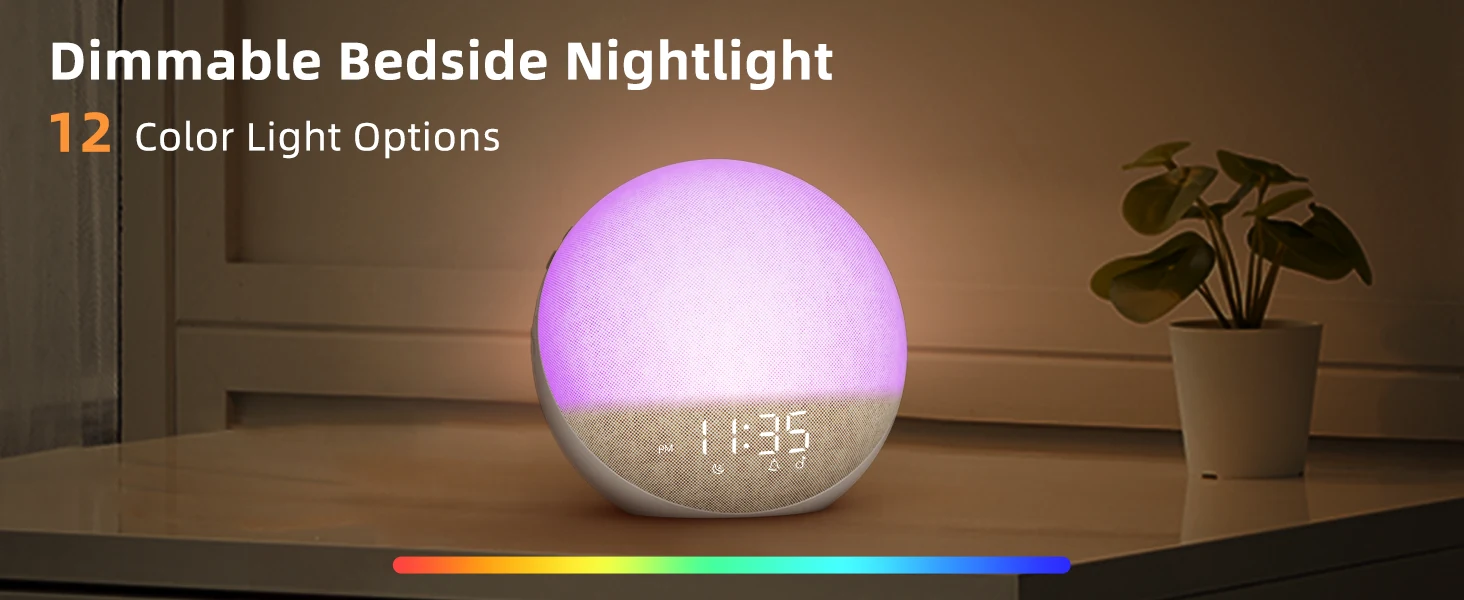
Dreamegg Sunrise 1: for app-free sound and light

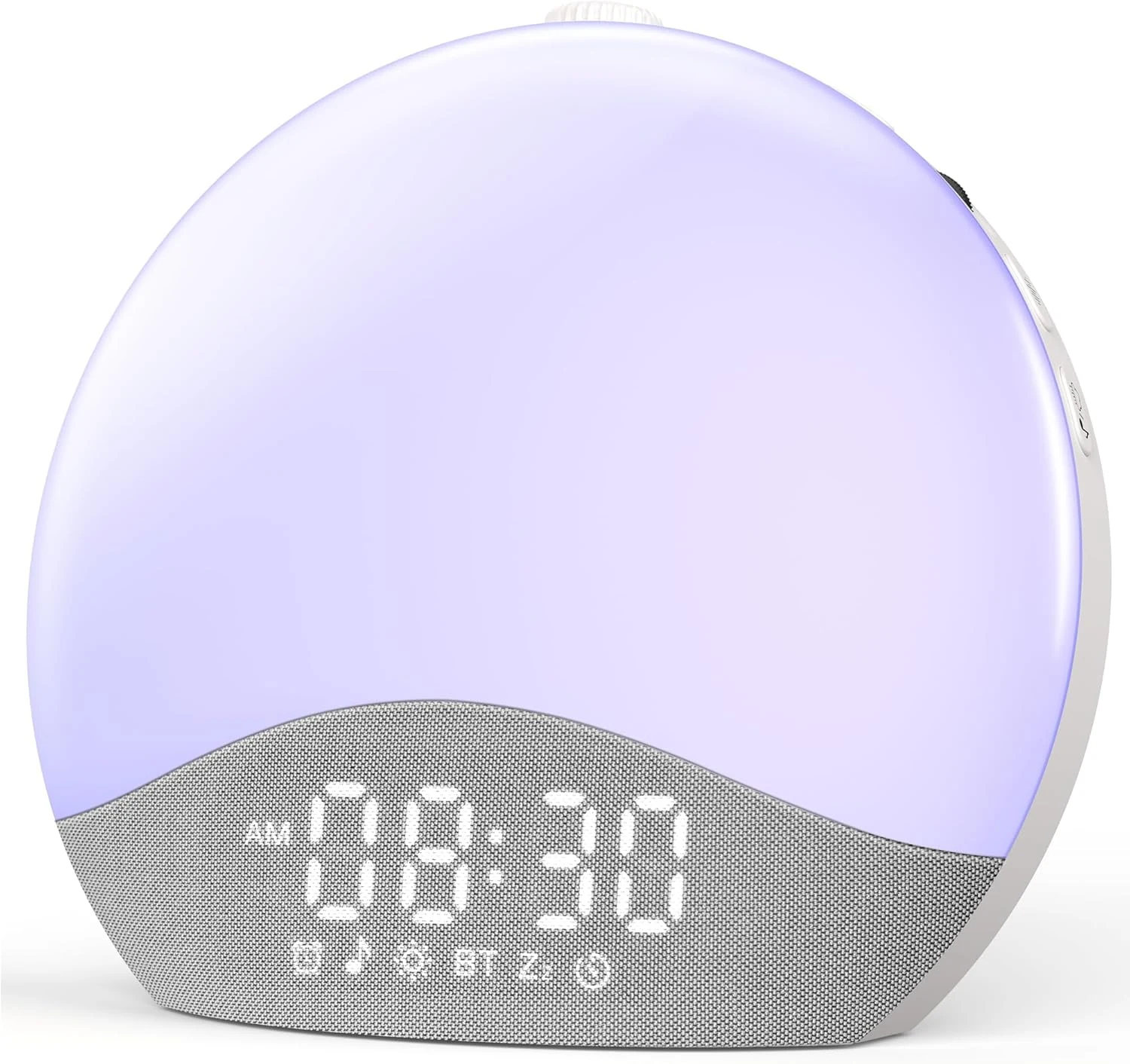
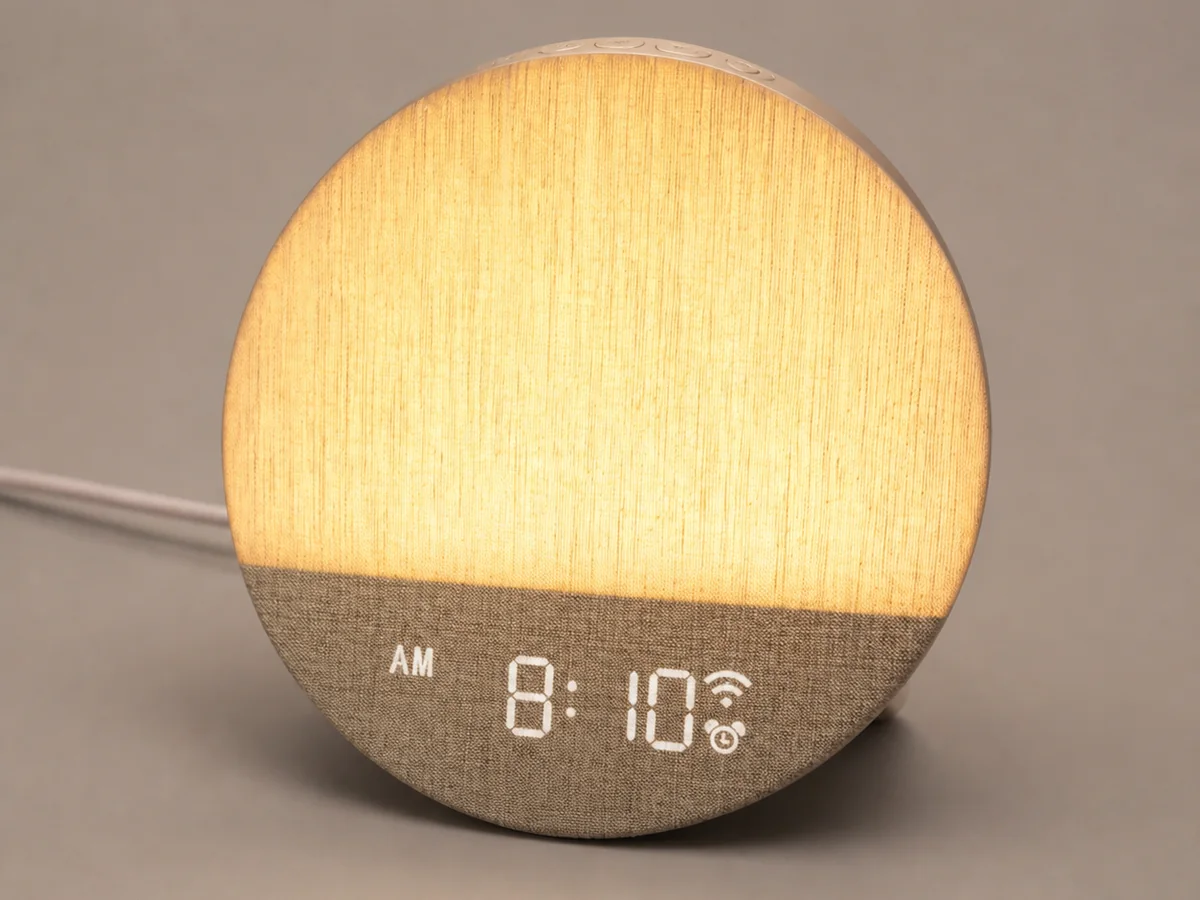
Dreamegg Sunrise 1 compact circular fabric wake light and sound machine
Dreamegg Sunrise 1: a compact, app-free wake light and sound-machine format. Original TOPCLOCKS editorial image; verify the exact finish and controls on the current model.

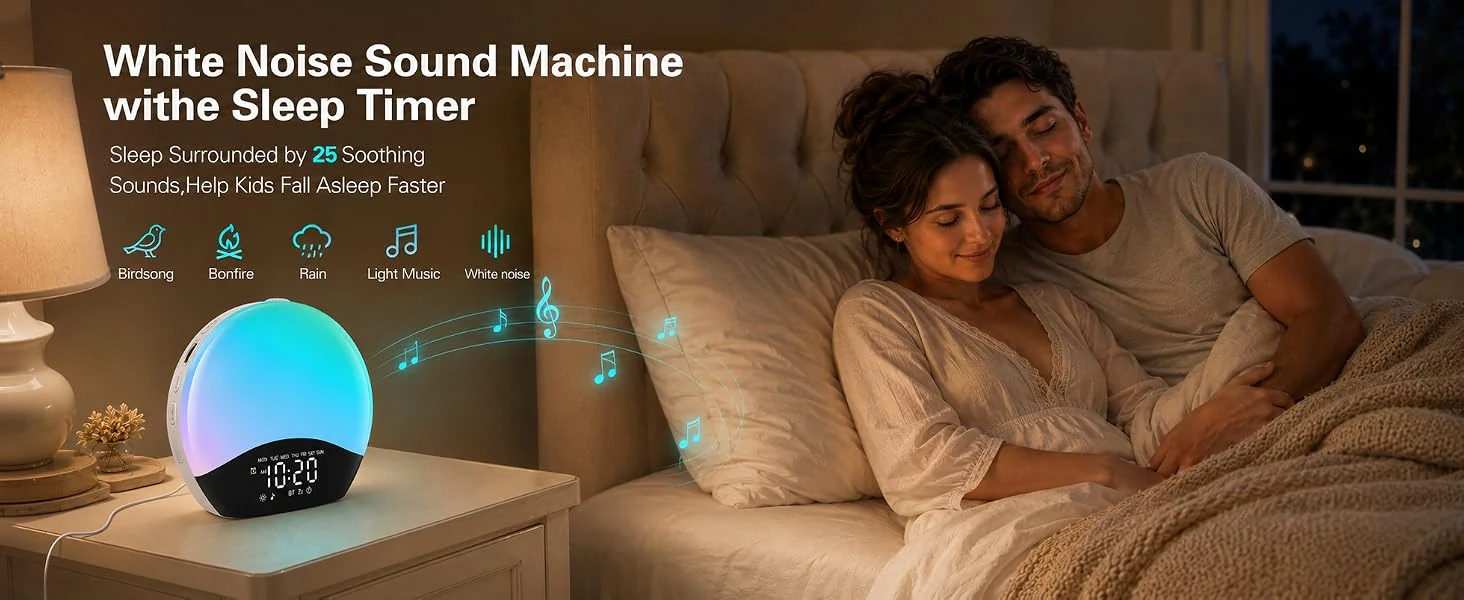
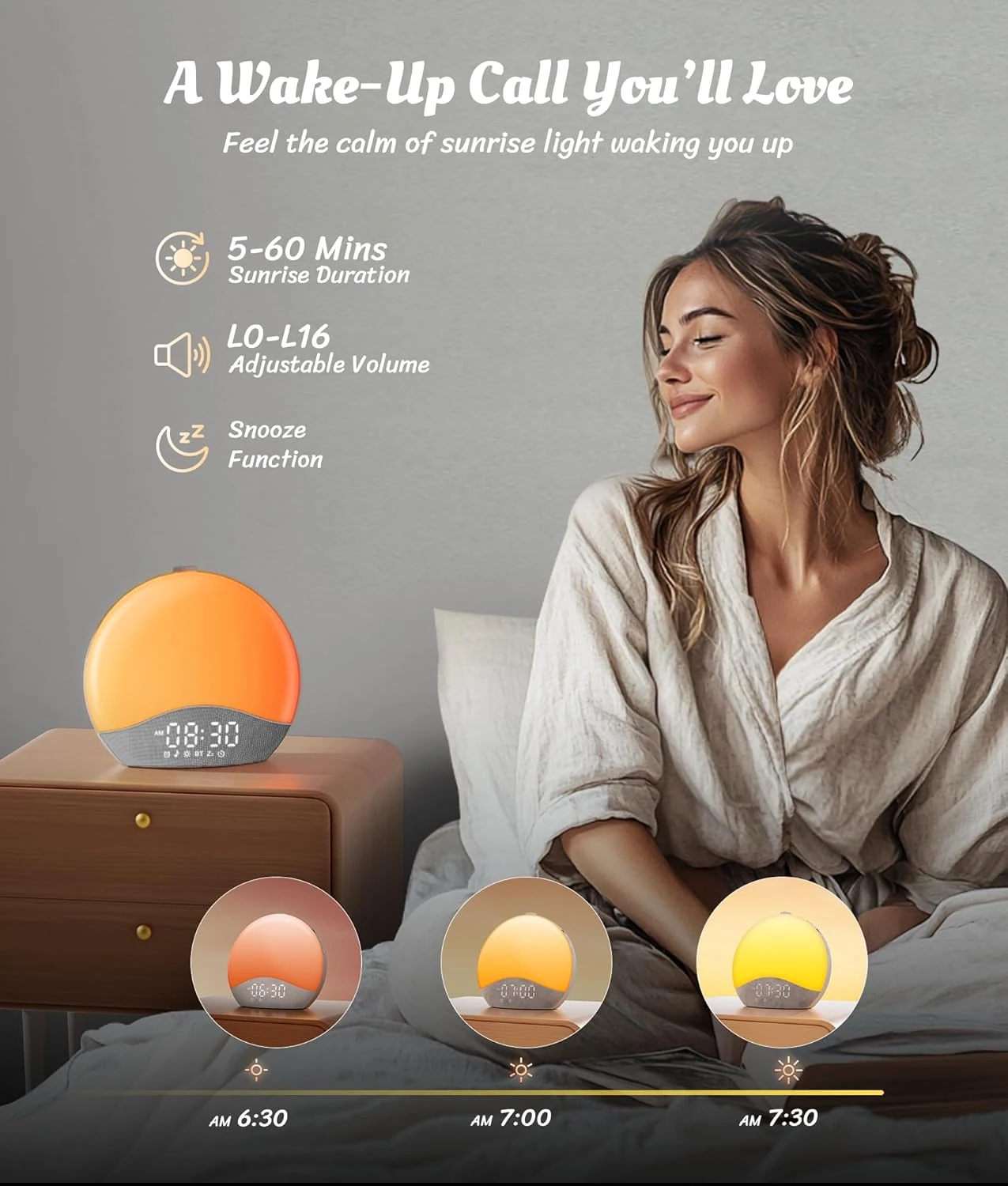
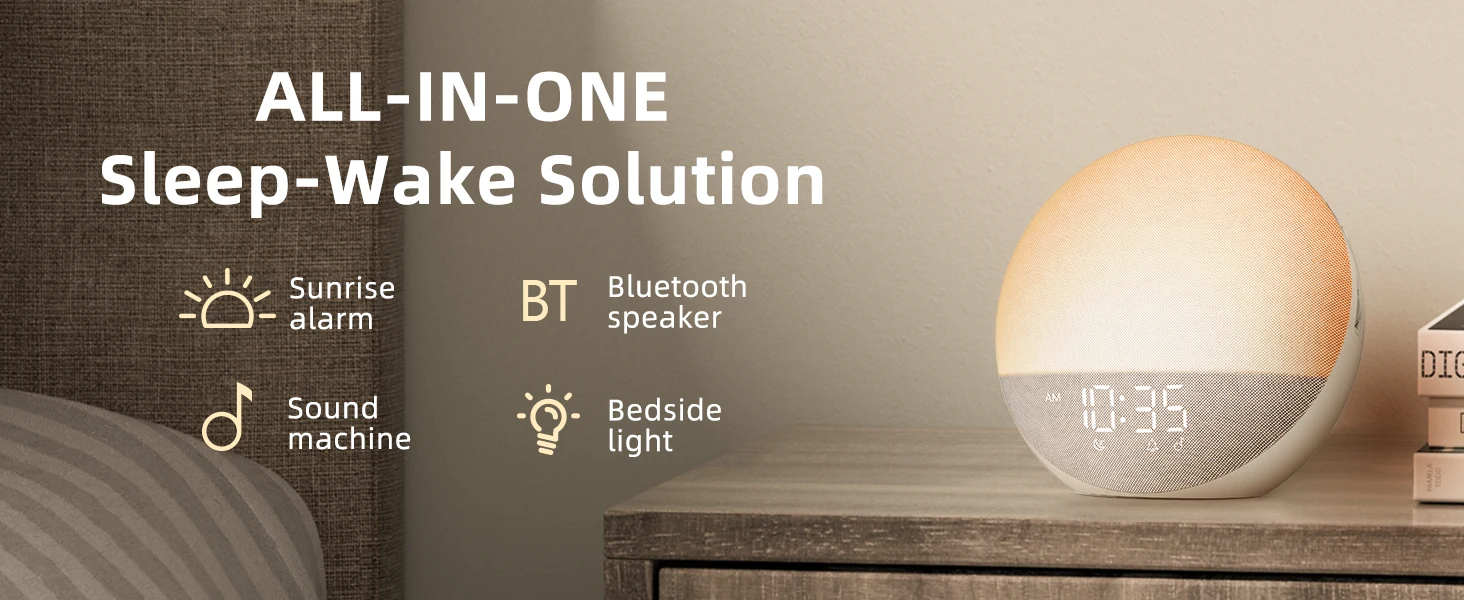
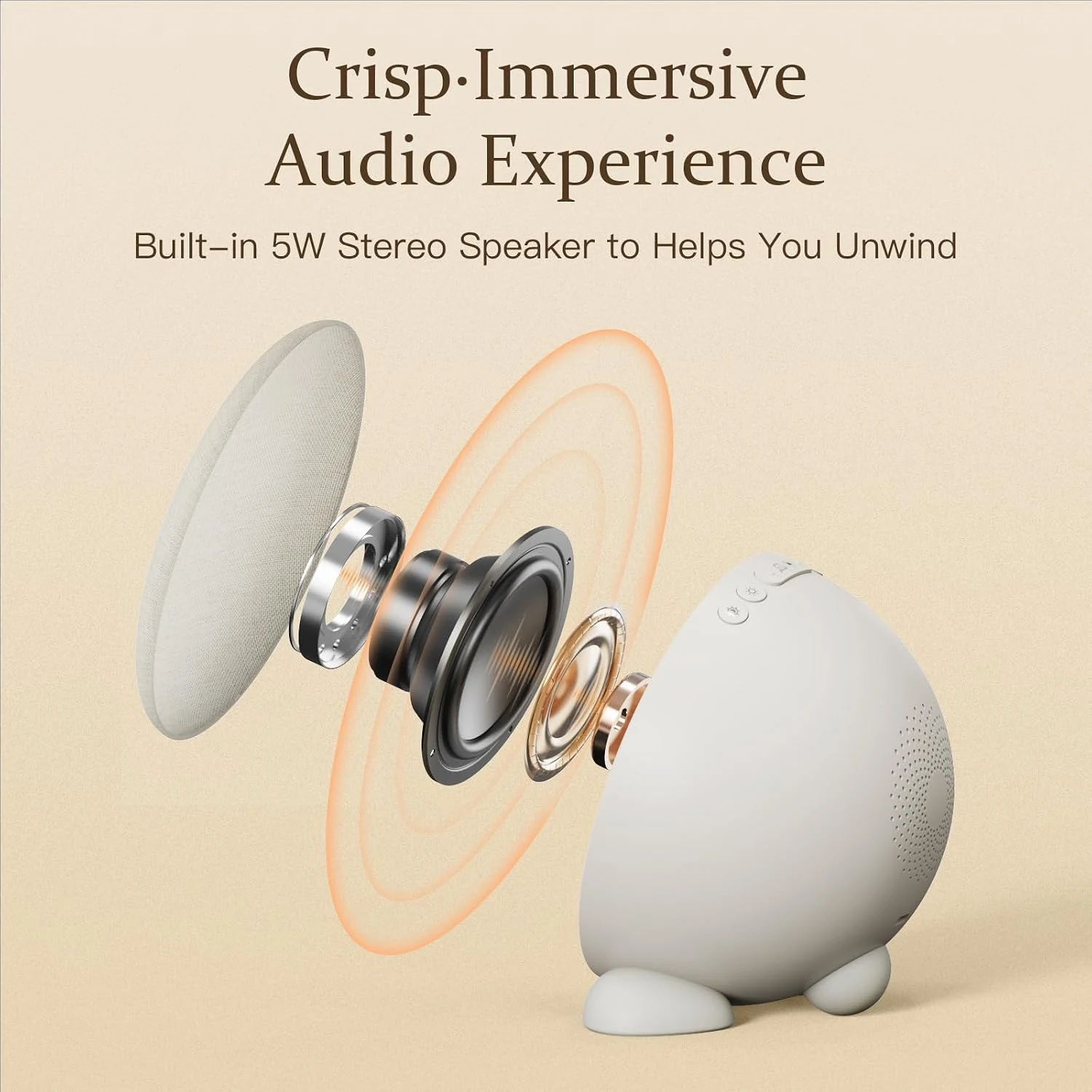
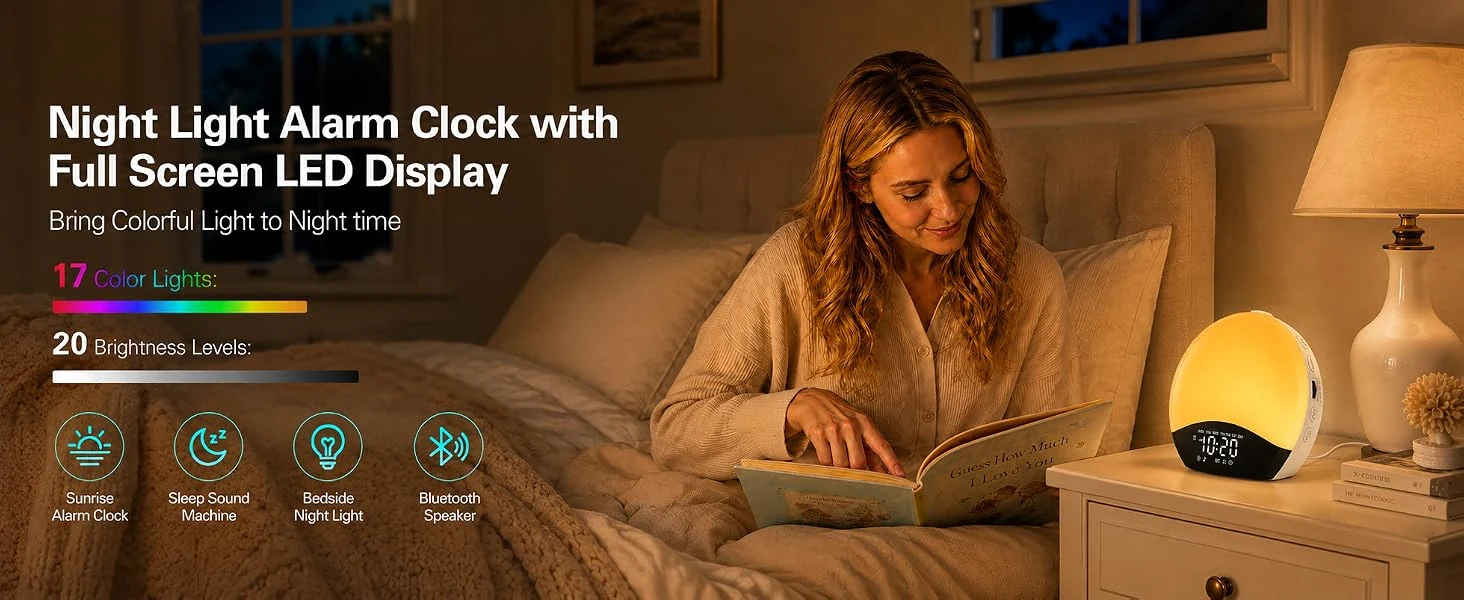
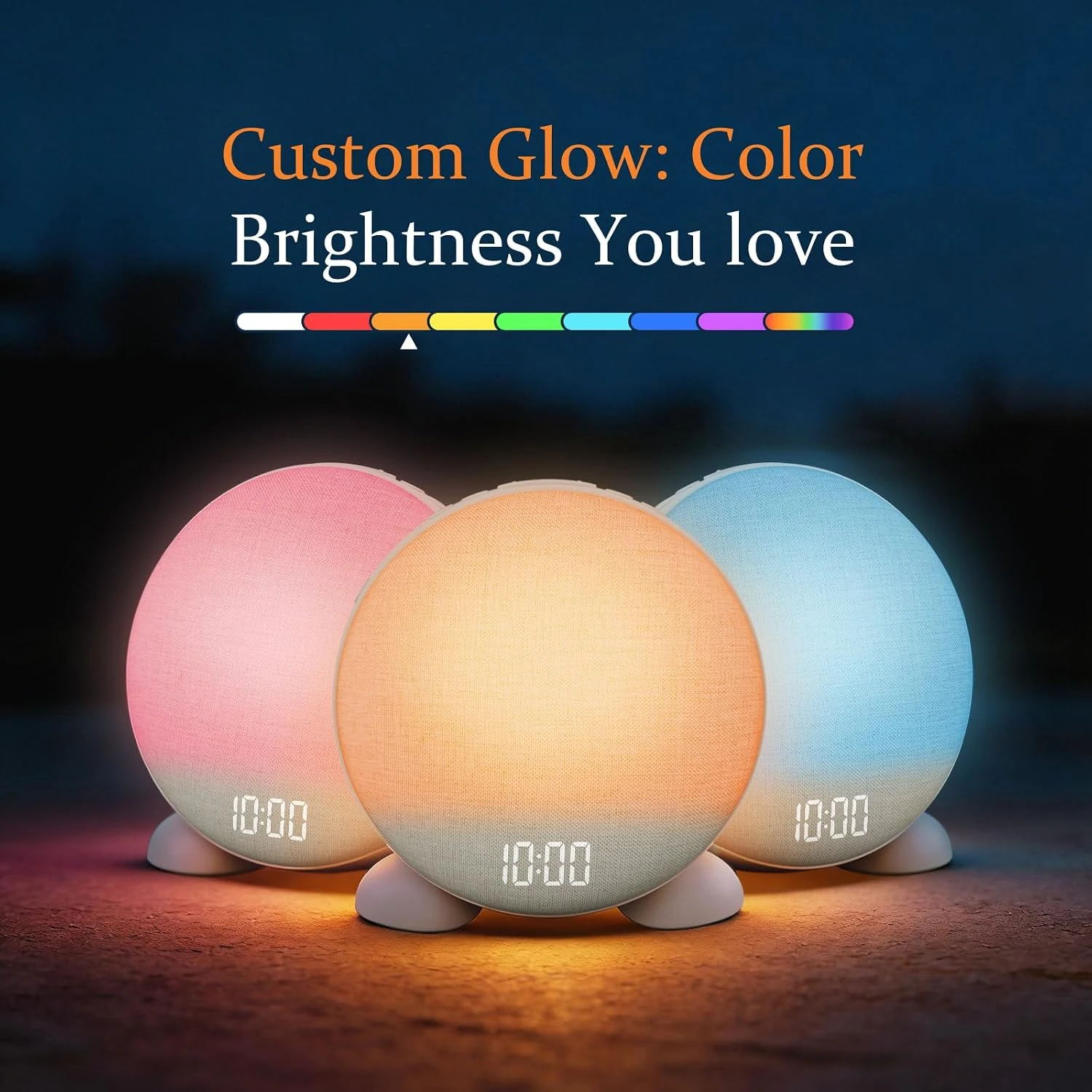
Dreamegg Sunrise 1 combines a compact wake light with a sound machine and keeps control on the hardware. Dreamegg explicitly describes it as app-free, without Wi-Fi or data tracking. The current page lists 29 sound profiles, nine light colors, adjustable sunrise duration, tactile buttons, a USB-C power connection, and a footprint of 5.91 by 5.91 by 2.87 inches.

This route is attractive when the phone itself is the bedroom problem. You do not have to create a cloud routine to change a sound or light. The device also has enough sleep-audio choices to serve someone who already runs white noise or nature sound at night.

The missing specifications matter. Dreamegg does not publish peak illuminance, the exact sunrise-duration range, or power-loss behavior on the cited product page.

Do not fill those gaps with figures from a similar-looking marketplace clock. Many round wake lights share a shape without sharing firmware or light output. Ask for the current manual if those details control your decision.

There is a second practical tradeoff. Twenty-nine sounds look generous in a table, but sound count cannot tell you whether one masks your actual bedroom noise or whether the alarm tone is distinct enough to wake you. Because this guide did not audition the speaker, it treats the sound library as variety, not quality.

Dreamegg fits the buyer who wants hardware controls, a compact sound machine, and a lower-complexity setup. It is a weaker fit for someone who needs published brightness measurements, smart-home triggers, or a documented outage plan.

Source: Dreamegg Sunrise 1 product page.

WiiM Wake-up Light: for music and smart-home control

WiiM Wake-up Light wide dome on a perforated smart-speaker base
WiiM Wake-up Light: a low dome paired with smart audio, streaming, and app routines. Original TOPCLOCKS editorial image; verify the exact finish and controls on the current model.

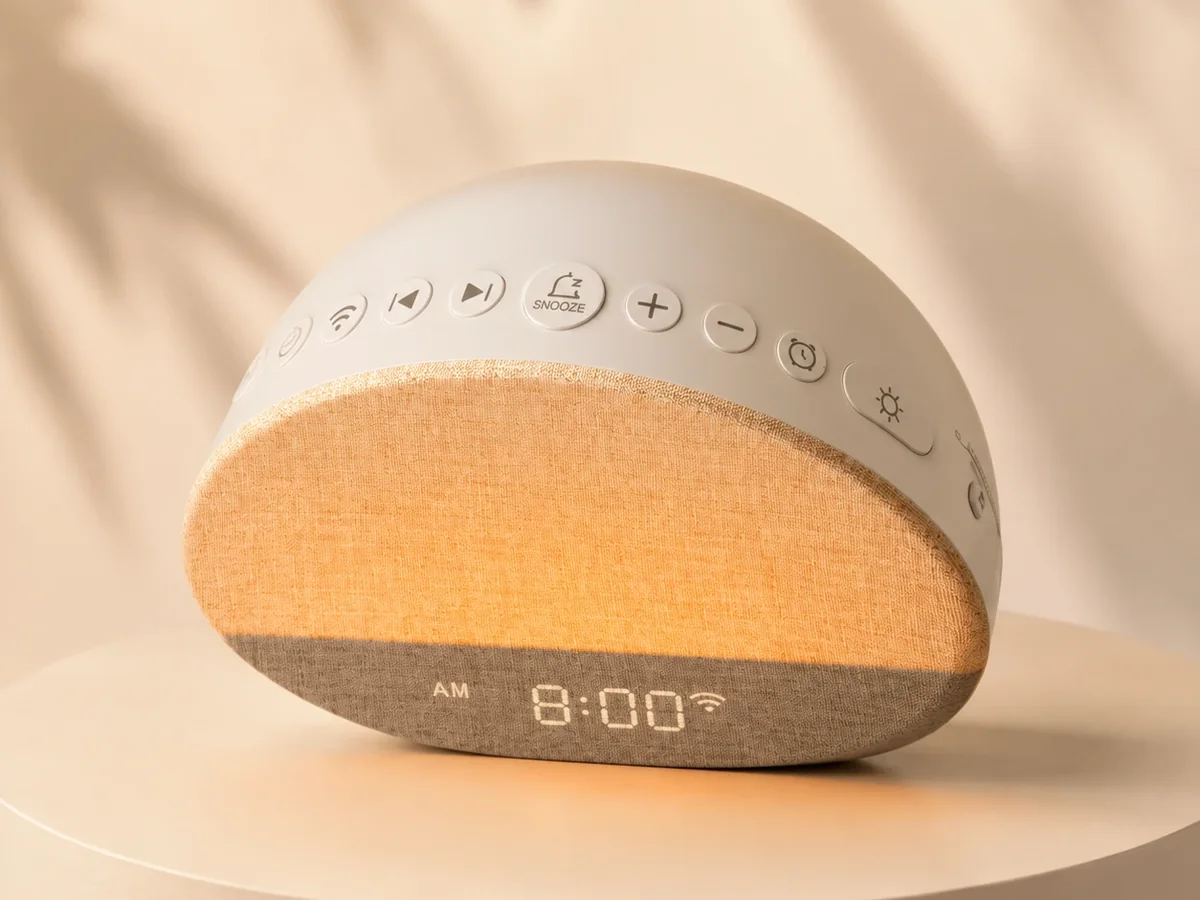
WiiM starts from the opposite assumption: the wake-up light can also be a connected audio device. In the WiiM Light app, an alarm can include its time, repeat days, audio source, duration, volume, volume ramp, sunrise duration, and maximum brightness. The product supports internet radio, podcasts, compatible music services, Bluetooth playback, and Alexa control. Alexa is optional; WiiM says the app can control the light without an Amazon login.

That flexibility solves a specific complaint about many sunrise clocks: five nature sounds are not everyone's idea of a good morning. WiiM can use a chosen station, playlist, or other supported source. Physical buttons still cover volume, brightness, light modes, stopping the alarm, and snoozing, so the phone is not the only way to silence it.

Connected audio introduces more links in the chain.

Setup uses the WiiM Light app and a Wi-Fi network. A streaming alarm can also depend on the status of a third-party service and its account rules. If a particular playlist is essential, find out what the clock does when that source is unavailable. A built-in tone fallback is more valuable than an impressive service logo if your morning cannot slip.

WiiM's official overview advertises a large selection of free sounds and does not present a WiiM content subscription as a requirement. Some external music services do require their own subscriptions. Keep those two costs separate when comparing it with Hatch+: one is a device-content plan, while the other may be an account you already use for music.

Choose WiiM when smart audio is part of the requirement, not merely a bonus. If you only want light followed by a reliable beep, the network, microphone controls, apps, and service menus add complexity without improving the core alarm.

Sources: WiiM Wake-up Light, alarm setup options, sunrise routine setup, and physical controls.

Will the light reach you? Placement comes before brightness

A wake-up light can be powerful on the table and ineffective at the pillow.

Illuminance falls as distance increases, and a bedside diffuser does not send equal light in every direction. Your closed eyelids, sleeping position, comforter, and partner create more variables. This is why a published maximum lux figure cannot serve as a universal ranking.

Start with line of sight. Put the clock on the side you usually face, with the lit surface at roughly pillow height and no stack of books between it and the bed. Do not aim a glaring point source directly into your eyes; follow the manufacturer's distance guidance. The goal is broad exposure across the room and eyelids, not discomfort.

Side sleepers should test both orientations. If you usually turn away from the nightstand, a lamp on that side may light the wall more effectively than it lights you. In a large room, moving the clock a few inches closer can matter more than selecting another decorative color.

Blackout curtains create a useful test environment because the device is not competing with an early natural sunrise. They also reveal whether the first stage is too bright. In summer, outside light may start before the clock and make the simulated ramp irrelevant; the sound deadline and sunset features can still be useful.

Couples have a different geometry problem. Light spreads, so the person who does not need to wake may receive the signal first. A shorter ramp, lower maximum, placement on the waking partner's side, or a wearable vibration alarm may protect the other sleeper better. No product can promise a private sunrise from an open bedside diffuser.

What research can—and cannot—say about dawn simulation

Light is an important time cue for human sleep and wake patterns, but that broad fact does not prove that every commercial sunrise clock produces the same result for every user. Consumer devices differ in spectrum, output, ramp shape, placement, and timing. People differ in chronotype, sleep debt, eye sensitivity, medication use, and bedroom conditions.

Small studies offer a reason to investigate the idea, not a guarantee.

In a 2014 crossover study, eight participants who reported difficulty waking received a 30-minute simulated dawn or a control condition. The dawn condition was associated with higher subjective alertness and better performance on some cognitive measures after waking. Eight people are far too few for a universal buying promise. Read the PubMed abstract.

A community study followed adults during alternating periods with and without dawn simulation. Seventy-seven participants completed the protocol. The authors reported a modest improvement in subjective sleep quality during use and explicitly called for further research. Read the full study.

Another study exposed 17 sleep-restricted participants to dawn-simulating light or dim light. Some cognitive tasks improved under the dawn condition; others did not, and subjective sleepiness did not show the same benefit. The result is useful precisely because it is uneven. “May help some aspects of waking under some conditions” is more accurate than “makes you wake refreshed.” Read the PubMed abstract.

What does that mean at the nightstand? A gradual light may make your own transition into a scheduled wake time feel easier, especially in a dark room. You still need adequate sleep, a realistic schedule, and a dependable alarm deadline. A sunrise clock cannot repay sleep debt or diagnose persistent trouble waking.

A sunrise alarm clock is not a SAD light-therapy box

The devices can look related because both use light, yet their jobs and doses are different. A sunrise clock delivers a gradual bedside cue around wake time. A light-therapy box is intended to provide a prescribed bright-light session while a person is awake.

The National Institute of Mental Health describes light therapy for winter-pattern seasonal affective disorder as sitting in front of a 10,000-lux light box for about 30 to 45 minutes, usually first thing in the morning. NIMH also notes that people with certain eye diseases or medications that increase light sensitivity may need another treatment or medical supervision. Read the NIMH guide to seasonal affective disorder.

That guidance should stop a common shopping shortcut. A wake-up light that reaches a few hundred lux under a specified measurement condition is not equivalent to a 10,000-lux therapy box. Even a manufacturer with experience in light therapy may sell separate products for separate purposes.

If you are shopping because of persistent seasonal depression, major mood changes, or disabling sleepiness, begin with a health professional rather than a product badge. A sunrise alarm can be part of a comfortable morning routine without being represented as treatment.

Heavy sleepers, couples, and high-stakes mornings

“Heavy sleeper” is not a technical setting. It can mean that ordinary sound is missed, that the alarm is repeatedly snoozed, that the person is chronically sleep deprived, or that a medication or sleep disorder affects waking. A brighter clock will not solve all four.

For a person who sometimes sleeps through alarms, build layers:

  • Let the light ramp begin before the deadline.
  • Add a sound that grows to a clearly audible level at wake time.
  • Put the sound source beyond effortless reach if repeated unconscious snoozing is the problem.
  • Use a separate vibration or battery alarm when missing the wake time could threaten safety, travel, work, or caregiving.

Test on a low-consequence morning first. If the light wakes you ten minutes too early, shorten the ramp or lower its maximum. If sound does all the work but the lit room makes standing up easier, the clock may still be useful. It does not fail merely because you did not wake silently.

Hearing loss changes the backup plan. Light and vibration can complement each other, but suitability depends on the individual. A person who needs an accessible alerting system should choose equipment designed and documented for that purpose rather than relying on a lifestyle clock's brightest scene.

For couples, agree on the deadline and snooze rule. A 60-minute sunrise plus three sound snoozes may turn one person's gentle routine into another person's lost hour. A shorter shared light ramp followed by a personal wearable alert can be the kinder design.

A seven-night setup test

Do not judge the clock from one dramatic first morning. Use a small, reversible experiment.

Nights 1 and 2 — protect the deadline.

Set the sunrise to a middle duration—about 30 minutes when the device allows it—and select a moderate maximum light. Keep your existing audible alarm at the same wake time or a minute later. Note when you first remember seeing light and which signal actually got you out of bed.

Nights 3 and 4 — adjust one variable.

If you woke too early, shorten the ramp or reduce the starting/maximum level. If the room was still dark when sound began, improve placement before increasing every setting. Change only one item; otherwise you will not know what fixed the problem.

Nights 5 and 6 — test the real routine.

Use the alarm on normal work or school days, with the display behavior and bedtime sound you expect to keep. Check whether setting tomorrow's time feels easy. On an app-based clock, learn which actions are available without the phone.

Night 7 — rehearse failure.

Confirm that the alarm indicator is visible. Learn the stop and snooze controls by touch. Read the manual's power-loss language. If Wi-Fi or a streaming source is involved, choose a local fallback or keep a second alarm. Do not unplug a device simply to test it unless the manufacturer says doing so is safe and you are prepared to reset it.

At the end of the week, ask a plain question: did the sequence reduce friction between sleeping and standing up? Extra features count only if you used them.

Buying checklist: questions product pages often skip

Bring this list to the manual, support page, or retailer. “Not stated” is a valid result and a reason to ask before purchase.

Light

  • Does the selected alarm time mark the end of the sunrise?
  • What sunrise durations are available?
  • Can you adjust the starting and maximum level separately?
  • Does the light change color temperature or only brightness?
  • At what distance was any lux figure measured?
  • Can the lamp work as a practical reading light, or only as a night-light?

Sound and alarm logic

  • Can you run light only, sound only, or light followed by sound?
  • Does sound start at the chosen wake time or earlier?
  • How many independent alarms can you save?
  • Can weekday and weekend schedules differ?
  • How long is snooze, and does snoozing change the light?
  • What local sound plays if a streaming source fails?

Bedroom controls

  • Can the time display turn completely off?
  • Can you enable, disable, snooze, and stop the alarm without a phone?
  • Are the controls distinguishable by touch?
  • Does changing tomorrow's time require an app?

Connectivity and cost

  • Is an app required only for setup, or for every alarm change?
  • Is 2.4 GHz Wi-Fi required?
  • Must you create an account or start a trial?
  • Which light and sound functions remain after a subscription ends?
  • Do music alarms depend on a separate paid service?

Power and ownership

  • Does backup power merely preserve time and settings, or does it run the alarm?
  • How long will the device receive software and security updates?
  • Can the alarm still work if the manufacturer ends its cloud service?
  • Is the return window long enough for a real seven-night test?
  • Does the warranty come from the manufacturer or only the marketplace seller?

Frequently asked questions

Do sunrise alarm clocks work with your eyes closed?

Light can reach the visual system through closed eyelids, but the effect at your bed depends on intensity, spectrum, distance, direction, and the individual. The practical answer is to place the diffuser correctly and test it with a sound backup. Do not assume that a lamp across the room will perform like one beside the pillow.

How long should the sunrise ramp be?

There is no universal consumer setting. Thirty minutes is a common starting point and appears in several research protocols, but your response matters more than the convention. Shorten the ramp if the first light wakes you too early. Lengthen it if your clock allows and the room remains dark until the sound deadline. Adjust one variable at a time.

Is more lux always better?

No. A higher measurement can be useful when a lamp must illuminate a larger space, but it can also wake a sensitive sleeper early or disturb a partner. Lux is meaningful only with measurement distance and placement. Control range and room geometry may matter more than the maximum number.

Do sunrise alarm clocks work for heavy sleepers?

They may help as the first layer of a wake-up sequence, but light alone will not wake everyone. Choose a model with a dependable audible alarm and use vibration or a separate alarm when missing the deadline has serious consequences. Persistent extreme difficulty waking deserves a conversation with a health professional, not an escalating series of alarms.

Can a sunrise alarm clock replace a SAD lamp?

Do not treat it as a direct replacement. NIMH describes SAD light therapy with a 10,000-lux box used while awake for a timed session. A bedside sunrise clock usually produces a much lower, gradual cue for waking. Seek medical guidance for seasonal depression or light sensitivity.

Do I need an app or subscription?

Not for every model. Lumie Shine 300, Philips HF3520/60, and Dreamegg Sunrise 1 use on-device controls. Hatch Restore 3 requires its app, Wi-Fi, and a free Hatch+ trial for setup, though core sunrise functions remain after cancellation. WiiM uses an app and Wi-Fi for its connected features; outside music services may have their own account rules.

Will the alarm work during a power outage?

Never infer full alarm operation from the word “backup.” Philips lists time backup, and Lumie says Shine 300 keeps time briefly without power. Those statements do not say the light and speaker run during the outage. Check the exact manual and keep a genuinely battery-powered secondary alarm if the wake time is critical.

Is a sunrise lamp without a clock display still a sunrise alarm?

It can deliver a timed light ramp, but it is not a like-for-like alarm clock. Loftie Lamp, for example, offers an app-set nine-minute sunrise and can pair with a separate Loftie Clock for audio. Compare the complete system and price, not just the lamp's appearance.

How this guide was researched

We selected five products that represent distinct control routes and that had current official documentation available on July 23, 2026. We compared only fields that manufacturers publish or explain in support material: ramp timing, light controls, sound source, alarm logic, display behavior, app and network requirements, subscription boundaries, and stated power retention.

We did not convert manufacturer reviews into our own rating, repeat marketplace specifications when the model identity was unclear, or call a model “clinically proven” based on brand copy. Scientific context comes from primary studies indexed by PubMed or available through PubMed Central, plus NIMH guidance for the medical boundary around seasonal affective disorder.

Product software and terms move faster than bedside hardware. Before publication updates, recheck the Hatch subscription flow, WiiM service support, all product manuals, and U.S. availability. A future hands-on test should measure illuminance at realistic pillow distances, record the ramp curve, test local and network failure, assess controls in darkness, and separate time retention from actual alarm operation.

Before buying, open the manual for the exact model number and look for the alarm timeline, retained functions, and power wording. If the answer is absent, ask the manufacturer in writing. That unresolved detail is more useful than another “best overall” badge.